Skip to content
Ocean Hour Farm
Back to Library

Pigs for Progress

  • Case Studies
  • Animals Systems, demonstration case study, Regenerative Agriculture

We encouraged pigs’ natural ability to be disturbance machines, preparing farm fields by turning, loosening and aerating the soil, and controlling unwanted plant species. The herd’s natural rooting behavior provides tillage, replacing traditional farm machinery, transforming our land from manicured grass to thriving perennial pasture and restored wetlands. The herd also enjoyed occasional showers during the summer heat and drought, which were intended to reduce their tendency to tip the water trough over. Photo credit: Maaike Bernstrom / Ocean Hour Farm

Project Overview Toggle Accordion

Pigs are disturbance machines that we plan to integrate into our systems for at least two years to prepare farm fields by turning, loosening, and aerating the soil, controlling unwanted plant species, initiating ponds, and transforming food waste into soil fertility. Our goal is to harness the pigs’ natural rooting behavior for tillage rather than traditional farm machinery, transforming our land from manicured grass to thriving perennial pasture and restored wetlands. Additionally, we are tracking our expenses, labor time, and yields to demonstrate the economic viability and difficulty of raising pigs on pasture.

Date of work: 2025

DEFINITIONS 

  • Invasive Species – An invasive species is defined by the USDA as a non-native species to the ecosystem whose introduction causes, or is likely to cause, economic or environmental harm, or harm to human health.
  • Unwanted Species – This term, used in this case study, describes plants we don’t want in our pasture. While these might be considered invasive species in some places, they are not causing us harm as defined by the USDA; they simply do not meet our needs at this time.
  • Rooting – A pig’s instinctive behavior to use their strong snouts to push, dig, and nudge the ground to find food, cool off, explore, and more.
  • Fence Training – Similar to introducing a dog to an electric fence, our team taught the pigs how an electric fence works by introducing them to the wire at high voltage while a traditional fence remained nearby, until the pigs understood the concept. 
  • Demonstration Case Study – How our staff at Ocean Hour Farm is implementing a known regenerative farming concept with our observations from the field. This is not a comparative trial; it is simply observations from people close to the land.

Project Leads

Farm Staff: Abby DeVries, gg glasson, Megan Beale

Our Location

Location: Newport, RI, USA
Climate: Classification: Temperate oceanic
Growing Zone: USDA Plant Hardiness Zone 7a
Parent Soil Type: Canton and Charlton fine sandy loams; well-drained and include up to 20% rock formation. The soil is extremely acidic in wet areas, but otherwise is moderately acidic.

Problem Statement

We have two plant species that are outcompeting more nutrient-dense grasses preferred by our flock of sheep. Canada thistle (Cirsium arvense) and miscanthus (Miscanthus sacchariflorus or sinensis) have spread across the area shown on the map below. Miscanthus is a tall tufted ornamental grass, and thistle is a prickly flowering plant. Both plants are not palatable to our sheep and are therefore considered an unwanted plant species on our farm. These plants are introduced to this region and spread easily.

Zooming out from our farms’ specific needs, invasive plants also reduce habitat and food sources for wildlife, thereby destabilizing native animal populations. Plant seeds form an intricately connected food web, and invasive species disrupt these natural patterns, throwing off the balance and reducing the ecosystem’s ability to respond to large climate disturbances.

Our Solution

We are utilizing pigs’ natural rooting behavior to disturb and dig out unwanted plants on the property. While rotating them through carefully fenced areas where we want disturbance, we are observing the impacts on these two plant populations. ​

The 20 pigs (2 sows and 18 piglets) rotated through 1/10-acre plots created by portable electric fences. The herd would spend approximately seven days in each location, but would move slightly faster if it rained once a pasture was well disturbed.

Challenges

The most complex part of this demonstration for our staff was the farrowing period. Neither female pig had given birth before this year, and it was a steep learning curve for the first mother. This resulted in our staff of two people and one volunteer taking shifts around the clock to support the mother and protect the young until she learned how to move safely while nursing the piglets. This is not an uncommon scenario, but it did result in a few piglets being lost. The second mother seemed to adapt more quickly to nursing, but had a larger litter, which was harder on her body.

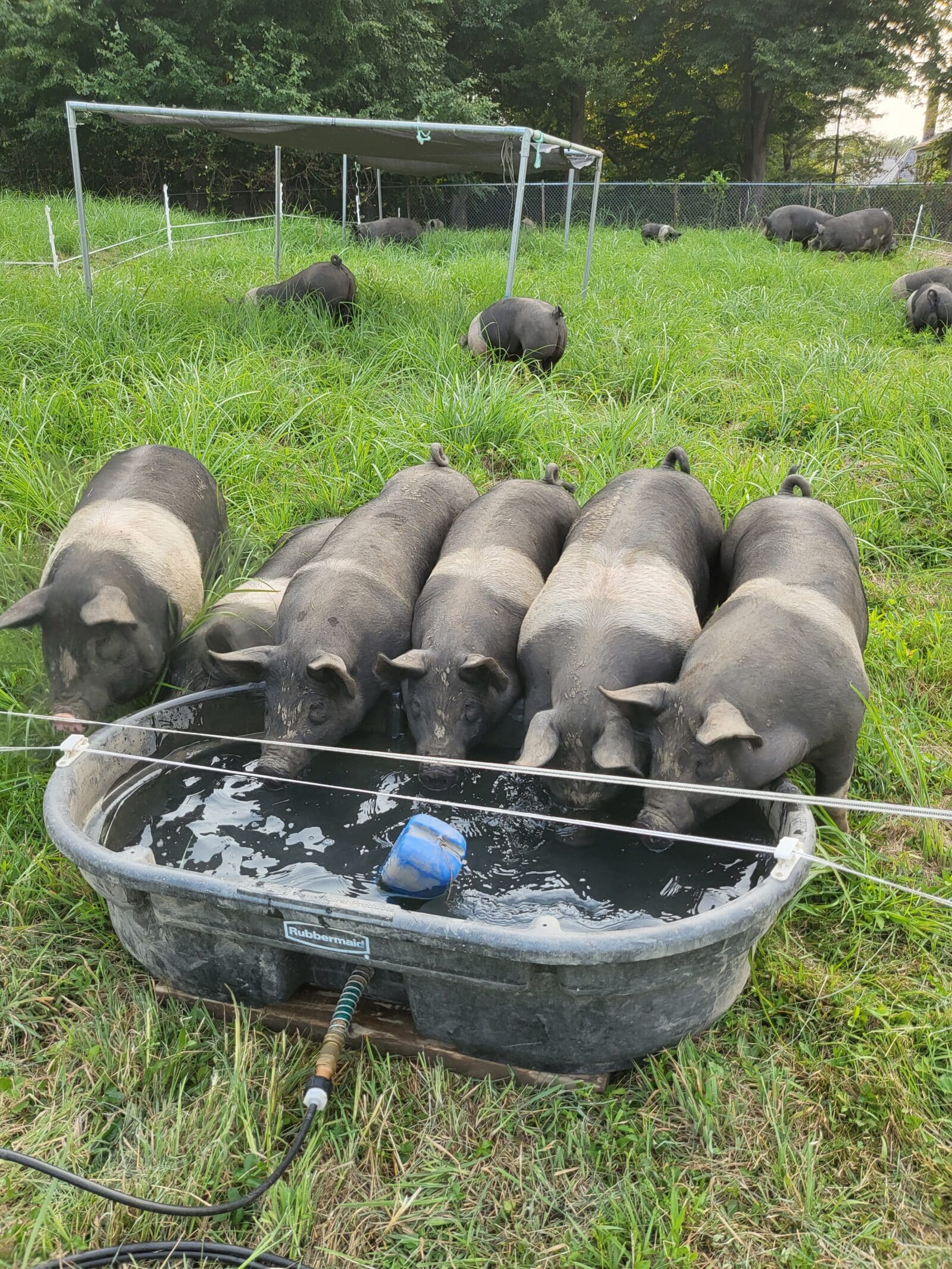
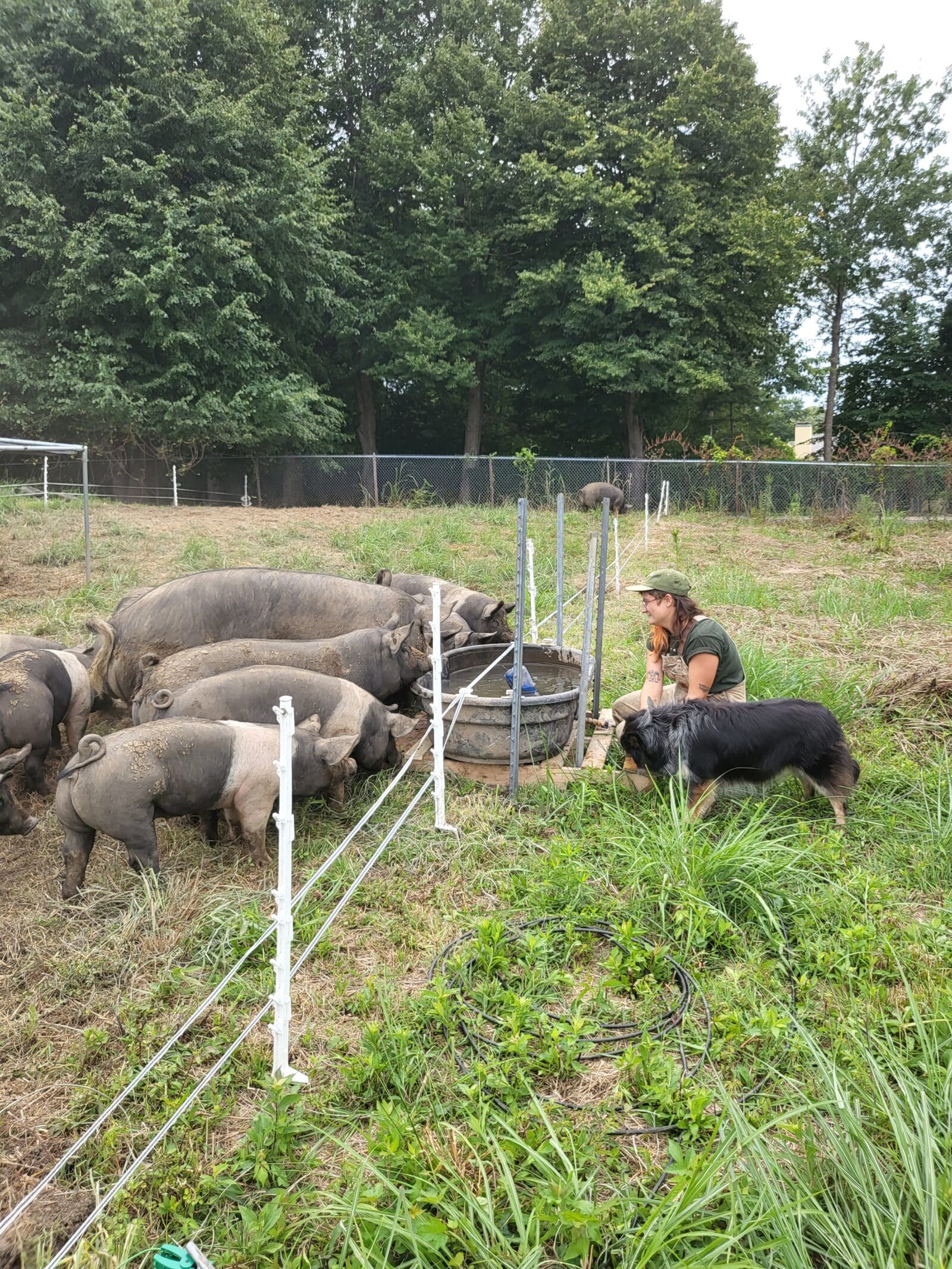
One challenge we faced was that pigs are very determined to tip over water troughs to make mud pools. Although the pigs enjoy playing in water, we did not want deep, compact holes in our pasture. We tried a few solutions, but what worked best was using a pallet and t-posts to brace and raise the trough. We also used an insulator to run an electric line across the top so the pigs could not get into the trough to tip it. To reduce soil compaction, we used a small-diameter hose to deliver water to the pigs rather than hauling it by vehicle.

Providing shade for the pigs during the hot summer and this year’s drought was also difficult. Most of our old, heavy structures are used for multiple species, so moving them takes extra time and more people. We switched to a hooped structure with a shade cloth that one person could move easily.

Old watering system.
New watering system with a pallet and t-posts to brace and raise the trough.

Results

The pigs successfully disturbed the areas where they grazed, and we’ve seen varying success with the cover crop and pasture mixes we planted, depending on germination conditions. We are observing the regrowth of the unwanted plants, but we will know more about the extent of the pigs’ impact on their density in the spring. More details are available in the pasture disruption details section below.

After the initial loss in the farrowing stage, we did not lose any pigs while on pasture. Overall, our staff found pigs easier to raise than poultry or sheep, as we did not experience any predation, and, in general, pigs are less susceptible to disease and parasites. We raised 18 piglets to full size, yielding 3,821 pounds of protein.

Tide to the land

Current management strategies for invasive species—promoted by groups ranging from local garden clubs to state agencies—rely heavily on aggressive pesticide applications that degrade soil health and contaminate waterways. Our study trialed an alternative, chemical-free approach to determine if sustainable management could be achieved without chemical usage, which ultimately runs off into the ocean. 

Beyond eliminating chemicals, improving how we manage unwanted species fosters greater biodiversity; this, in turn, builds more resilient ecosystems in critical buffer zones like marshes, ultimately enhancing natural water filtration near our coastlines.

​On the left, pigs were fed on the ground to promote even disturbance,​ and on the right, pigs were eating miscanthus. 

Methods

Preparation

Our initial two breeding sows, heritage breed Berkshires, were selected as they were available in Rhode Island from Wild Harmony Farm, where they had been bred for ease of handling, strong health, and calmness. Additionally, the pigs were raised in a similar pasture-based system and were already electric-fence-trained. Our animal systems staff performed on-site artificial insemination using supplies from Shipley Swine Genetics.

Implementation

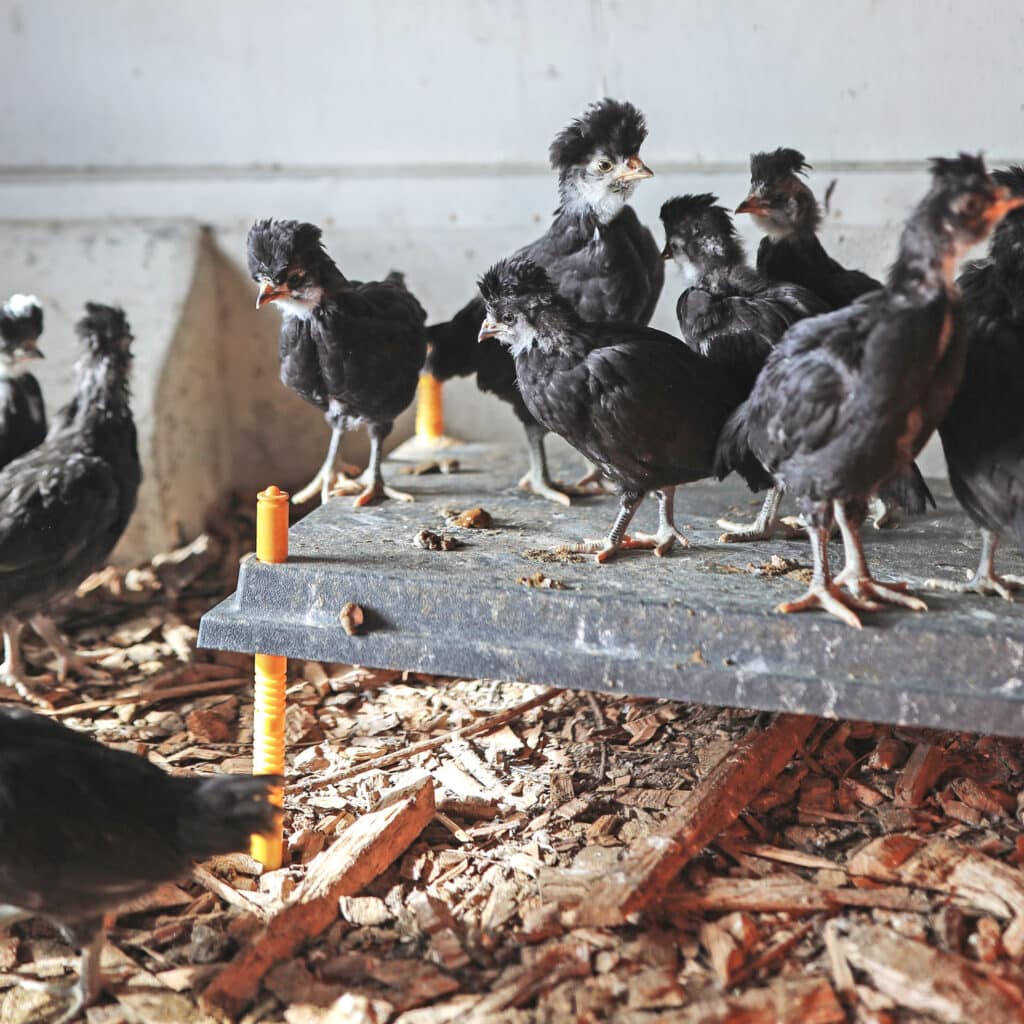
Two litters of piglets were born in the spring, one in March and one in May. Each was raised for 8 weeks in the barn. They were trained to an electric fence and then put to work in the pasture. The sows went out on pasture for a few weeks, then were given time to rest in the barn to wean the piglets, and then rejoined them on the pasture. 

When making infrastructure choices for setting up new livestock programs, we prioritize systems that are multi-use, stackable, and human-scale. Decisions to this effect include selecting feeding troughs that require twice-a-day feeding rather than a 1-ton bulk feeder, utilizing shade structures that multiple species can use, and transporting our bulk grain bins on wheels around the property rather than a stationary silo. These decisions, in part, are because our team is making daily decisions about movement based on animal observations and to record our impact on the land.

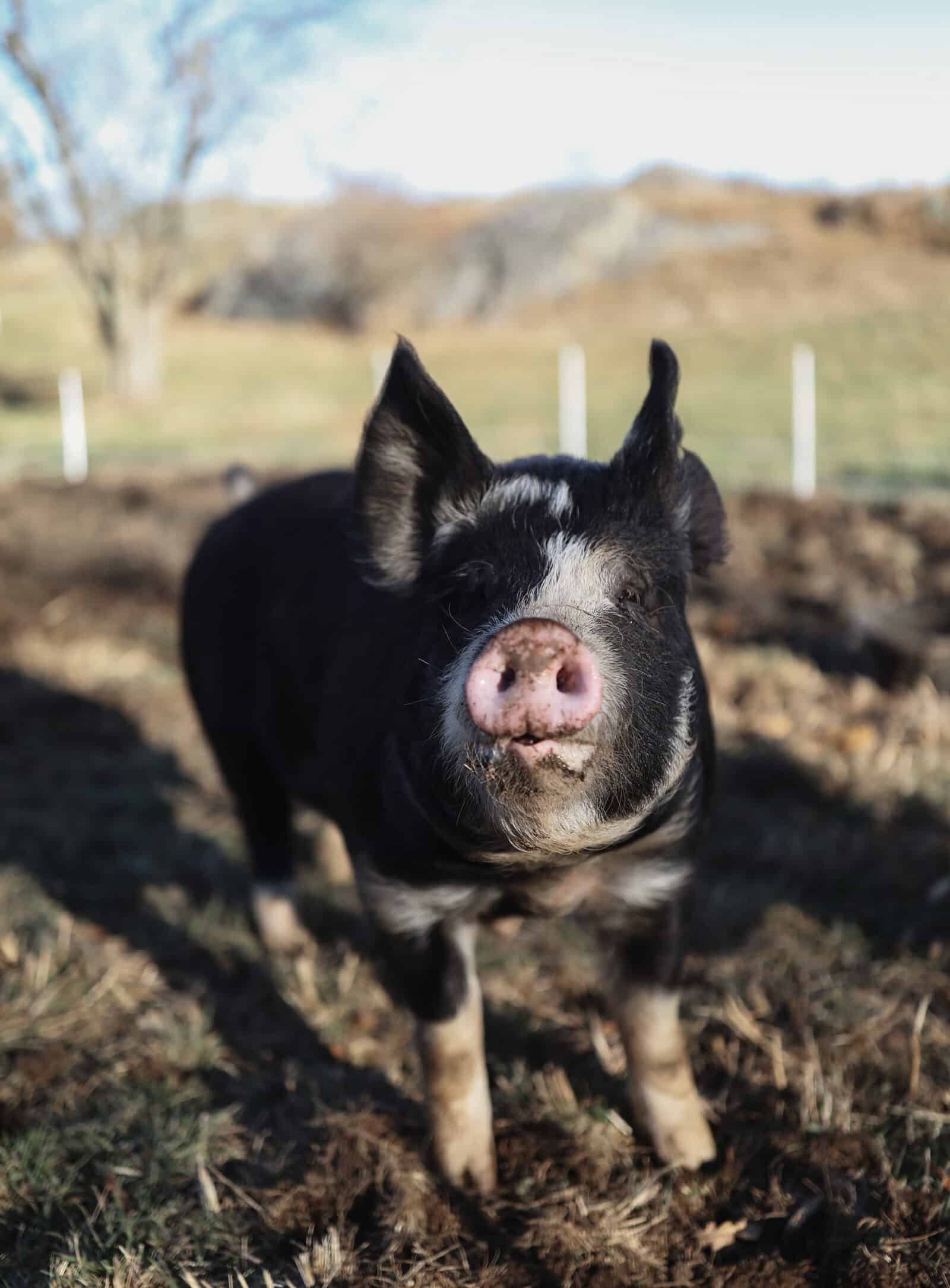
The heritage breed Berkshires, were selected as they were available in Rhode Island from Wild Harmony Farm, where they had been bred for ease of handling, strong health, and calmness. Photo credit: Maaike Bernstrom/ Ocean Hour Farm
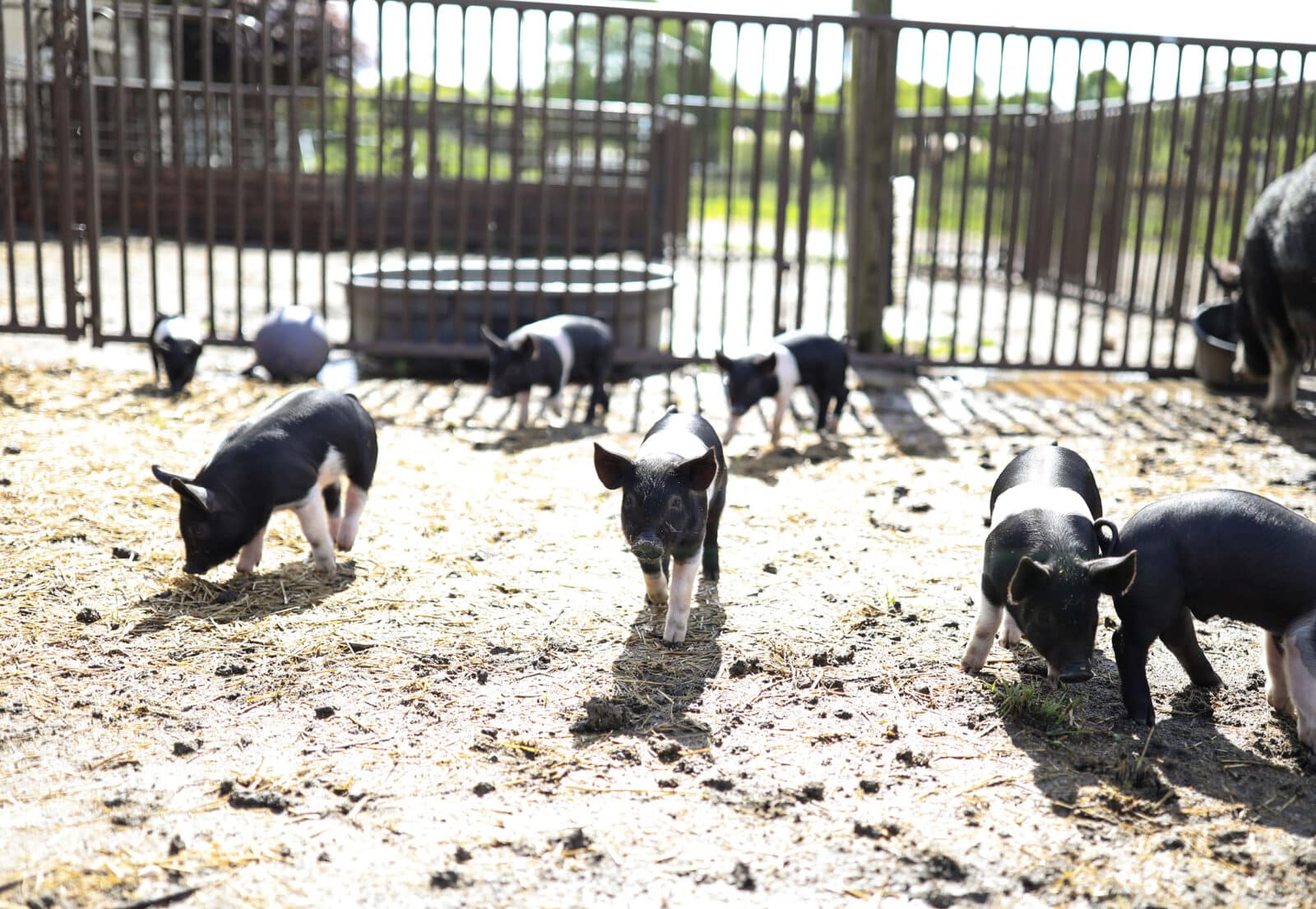
Two litters of piglets were born in the spring, one in March and one in May. Each was raised for 8 weeks in the barn. Photo credit: Maaike Bernstrom/ Ocean Hour Farm

Pasture Disruption Details

We used pig power on 18 plots, each approximately 1/10 of an acre. On average, the pigs spent one week at each location, but moved slightly earlier if it rained after a large amount of rooting.

Thistle

When the young herd first grazed in a pasture dense with thistle, we observed minimal removal; however, as the pigs matured, their effectiveness at knocking down thistle before it could seed improved significantly. On occasion, we supported removal by spreading feed onto thistle patches or cutting large plants after the pigs had completed their tillage. The ultimate success of this effort will be confirmed when we check thistle density in June 2026.

To encourage the herd to root out unwanted species, our animal systems team would occasionally feed them on top of the plant. In this video, they place the feed on top of a multi-flora rose bush, another unwanted plant in our pasture.

Miscanthus

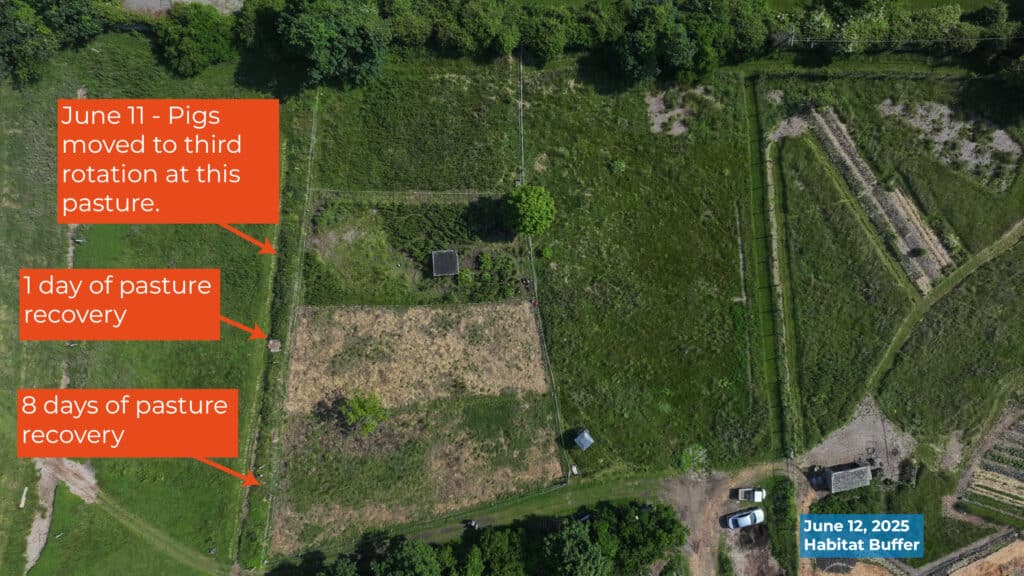
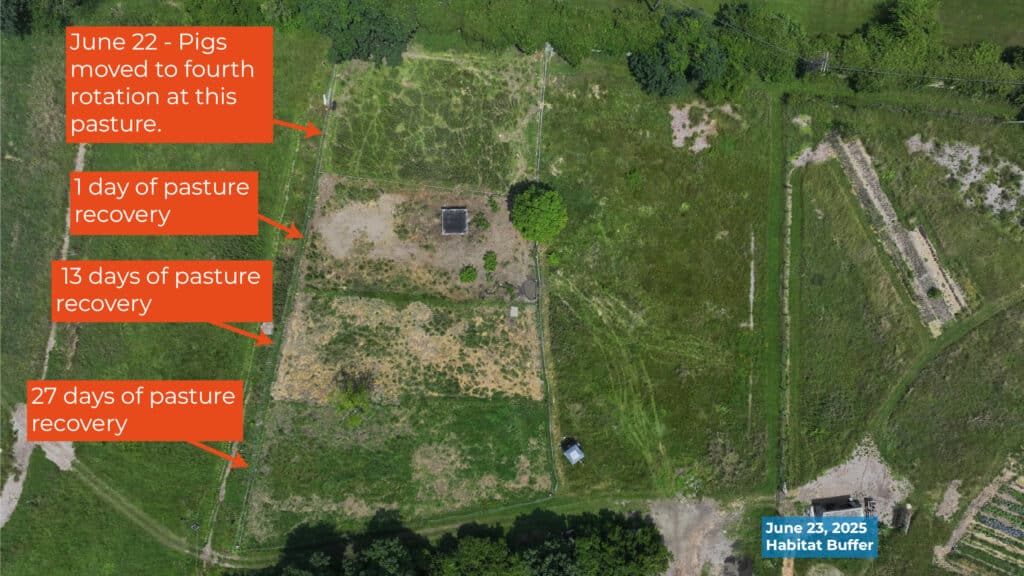
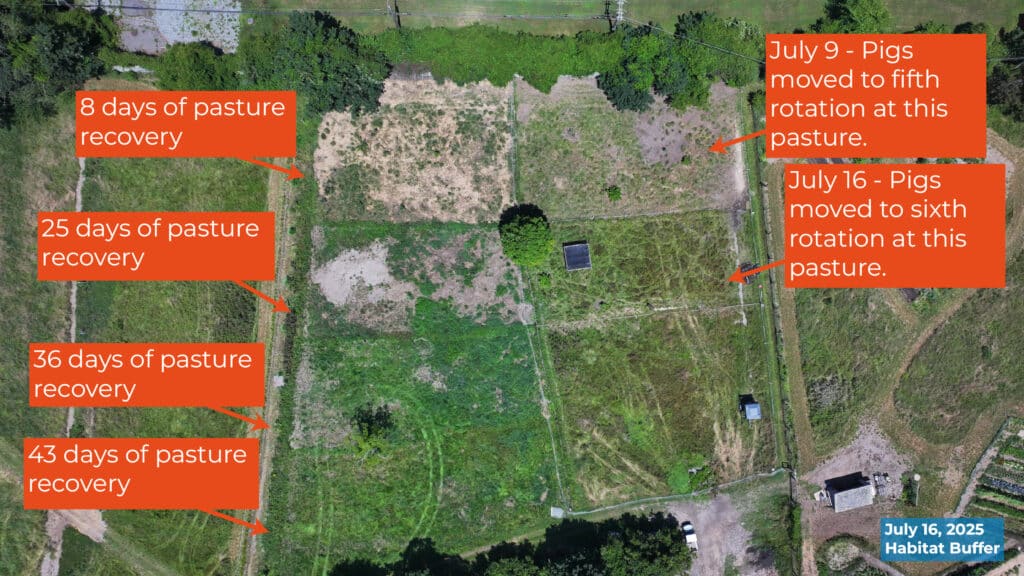
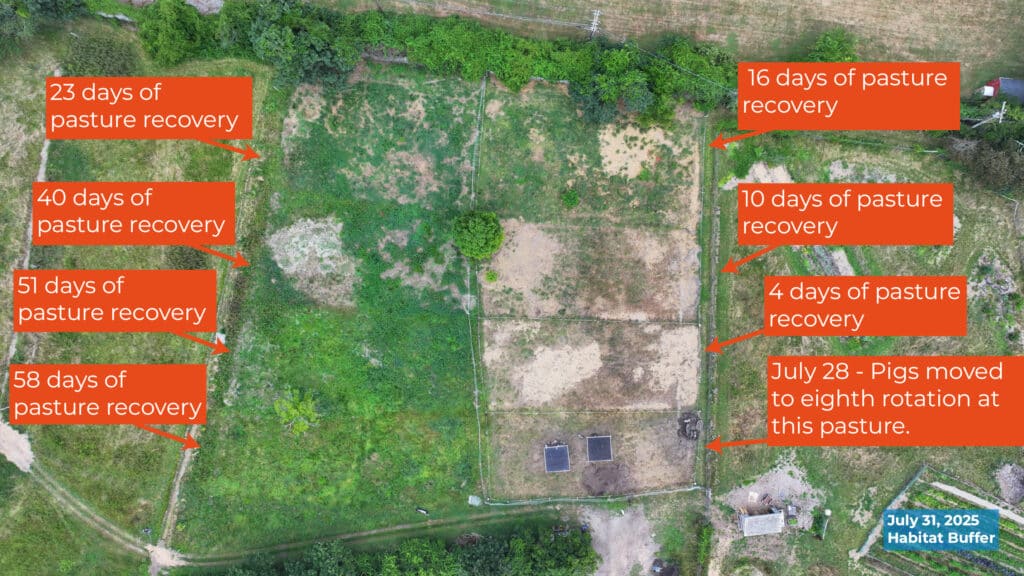
Along the farm’s south and west borders, we used the herd to root through fields where miscanthus is spreading. We divided the sections into 1/10-acre plots, moving the herd weekly, and then seeding either the day of or immediately after the pigs rotated to the next plot. We selected different seed mixes for each plot based on the season and our flocks’ needs. After spreading the seeds, we placed old hay on top to help the soil retain moisture and to prevent the seeds from blowing away.

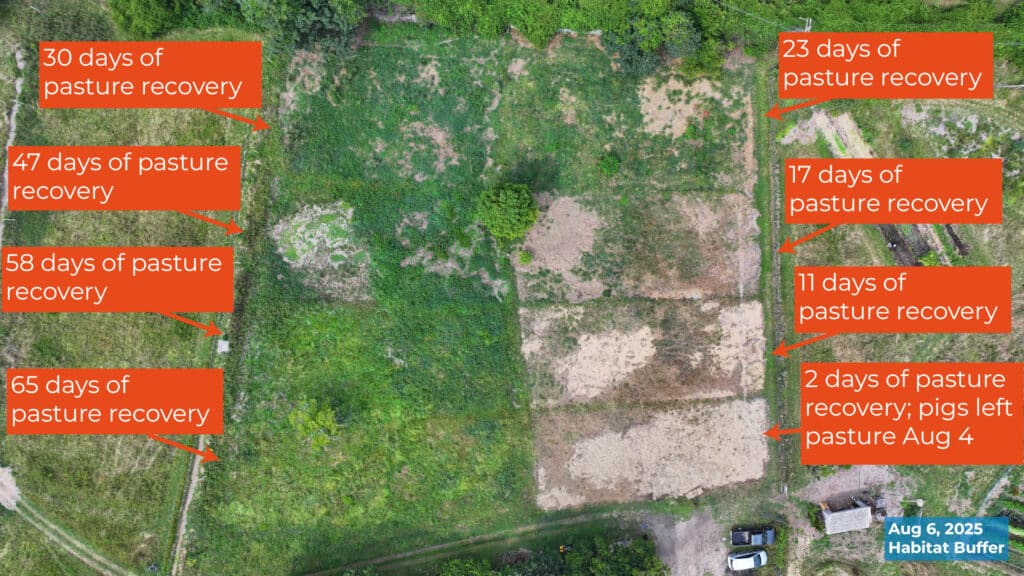
 In this picture, you can see the pigs have rotated into the center plot, with the furthest right plot having already been tilled by the herd. Furthest left, you have a yet-to-be-disturbed plot filled with miscanthus that has not seeded.

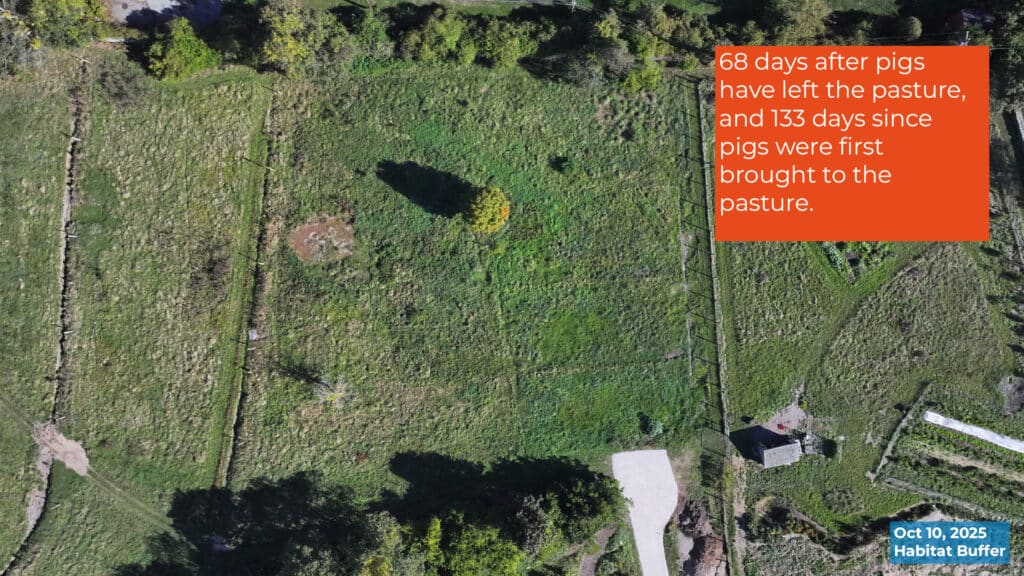
The video will advance to a new image every 10 seconds, showing the pasture recovery rate captured by our drone.

Timeline Toggle Accordion
Date Activity Notes
November 2024 Purchase Pigs from Wild Harmony Two gilts were brought to the farm
November 2024 Start Pigs on Miscanthus management Set up fence, water, and shelter in pasture with miscanthus, but observed minimal impact, likely due to only having two pigs, and it was too late in the season to establish a strong cover crop.
November 2024 Artificial insemination preparation Track heat cycles and prepare for 
December 5, 2024 Breed  One successful insemination
January 2025 Check for heat that would indicate if breeding was successful or not If there is a heat after the first breeding attempt, we will have to do it again. 
January 1, 2025 Breed Again Second successful insemination
March 2025 First round of piglets born Set up farrowing pens and support the new sows
May 2025 Second round of piglets born Set up farrowing pens and support the new sows
Early May Fence training Piglets The training area is set up and electrified next to Long barn. 
May 19  First group to pasture Piglets were encouraged to root out unwanted plants.
June 3rd Second group on pasture Piglets were encouraged to root out unwanted plants.
Mid-june Sows given rest time in the barn We weaned both groups at the same time, as the second farrow was larger and took a bigger toll on the sow
July to November 2025 Pigs rotate on fields in need of disturbance, followed by cover crops Fences set up and maintained, a daily feeding and watering routine established. 
November 5th, 2025 First 8 pigs processed at Meatworks For kitchen use and donations
November 12, 2025 The second group of 10 pigs processed at Meatworks For staff use and donations
November 2025 The cycle begins again Kept two female pigs for breeding

From August 4th, 2025, to November 19th, the herd of pigs rotated through the outlined section according to the timeline below. After rotation, different seed mixtures were scattered based on the time of year.

Cover Crop Distribution Toggle Accordion
Plots Seed Mix Time Period Notes Success?
1-4

Heavy Miscanthus

Sorghum Sudangrass and Cowpeas Aug 11 – Sept 1 These cover crops are in the same family as miscanthus, but are edible to sheep and even humans. Struggled with germination in the drought, as we did not bring in irrigation. We did see less miscanthus, but not as much depletion as we would have liked.
5- 7

Moderate Miscnthus

Winter Rye Sept 1 – Sept 22 With the drought subsiding, germination improved, with a clear difference in plots that received rain the week of seeding. This cover crop did pretty well, and it’s exciting to see the growth from week to week.
8-20

Patchy Miscanthus

Nature Seed’s Sheep Pasture & Forage Mix  Sept 22 – Nov 19 This seed is not a cover crop; it is what we want our pasture grasses to be composed of, and our team felt it was worth experimenting with, as the area has the least miscanthus. We seeded during the freeze-thaw cycle so that it will go deeper into the soil, and we will know more about success in the spring. We have spotted chicory in the field, but are unsure about clover’s success due to the low soil pH.
Expenses & Anticipated Revenue Toggle Accordion
Items Costs
Animal Costs
  • 2 Sows
$4000
  • Insemination
$200 (per time)
Infrastructure
  • Grain Bin
$5,264.33
  • Feed
$10,401.37
  • Shade Structure
Had on-site
  • Watering Supplies
$79 float valve

Water Trof – had on-site

  • Fencing
Had on-site
  • Seed for pasture after disturbance
$1,012.76
Labor
  • Chore time
1 person spent 40 minutes on daily chores for 365 days.

It took 2-3 people, 4 hours a week to move the structures to a new paddock, deconstruct the old paddock, and then seed and mulch the rooted pasture.

  • Farrowing Time
2 employees had 60+ hour weeks during the 2 weeks of farrowing

1 volunteer also supported during this time

Estimated Gross Revenue

Ocean Hour Farm is fully funded; we do not sell in the marketplace to avoid competing with local farmers. We use all of our food for staff, convenings, and donate locally.

This estimated cost per pound targets the middle ground between wholesale and retail, excluding all marketing and sales overhead.

Estimated value in the marketplace 3,821 at $16 per pound = $61,137

LESSONS LEARNED

  • Our watering system was changed midway through the process, as they were able to push over the first trough and then instinctively dig deeper where the water was spilled.
  • Having pigs on pasture requires keen observation and quick responses to the weather. 
    • When it rained, we had to move the pigs almost immediately, as the ground would get too muddy.
    • We have a lot of rocky outcroppings on the property where the herd dug quickly and needed to be moved after three days.
  • To encourage consuming the unwanted species, our team adapted a few tactics, including:
    • Spreading feed on top of large patches of thistle.
    • If this did not work, we would cut the thistle and leave it in the field for forage. 
  • To give our cover crops the best chance of success, we need to install irrigation and address the acidity in our pastures. Low soil pH can limit soil biological activity and the diversity of plants that you can establish and maintain in the fields.    
  • Within the fenced-off area, we selected a restroom area, where we saw the most uneaten miscanthus.
  • Purchasing 8-week-old piglets would significantly reduce labor hours; however, there are not many farrowing operations in New England.
  • After rotation, each paddock had mounded edges, and the pasture was bumpy. Depending on how you plan to use the pasture after the pigs have been there, you may need to level the area with a box blade or disc leveler, particularly if you plan to mow again. In our case, we intended to graze sheep and do not anticipate any issues with bumpy ground. 

Conclusion

  • We plan for this to be a two-year project, focused on utilizing the tillage services of traditional pigs. If they have succeeded in their task of managing invasive species and establishing ponds within the two years, we may then pivot to a pig breed known to be better for grazing rather than tilling, such as the Idaho Pasture Pig or the Kune kune. All pig infrastructure would then be transferable to the new management system. 
  • We did not closely monitor the soil’s chemical composition to understand the impact of pig manure, and this could be interesting to document in the future.
Author
Hilary Kotoun
Hannah Reali
Date
March 2, 2026