The Power of Poultry
- Case Studies
- Animals Systems, demonstration case study, Soil Health
We rotationally grazed poultry for meat production using a poultry tractor on depleted soil to demonstrate a low-staff-hours management system and to observe soil and grass health while considering economic viability for regional farmers.
Date of work: 2025
Farm Staff: Abby DeVries, gg glasson, Megan Beale
Pasture Consultant: Sarah Flack, Author of The Art and Science of Grazing
Location: Newport, RI, USA
Climate: Classification: Temperate oceanic
Growing Zone: USDA Plant Hardiness Zone 7a
Parent Soil Type: Canton and Charlton fine sandy loams; well-drained and include up to 20% rock formation. The soil is extremely acidic in wet areas, but otherwise is moderately acidic.
At Ocean Hour Farm, like many farmers in the Northeastern United States, we face soils depleted of nutrients. This can happen from growing annual crops in the same place for a long time or, as in our case, when transitioning from a grass field to a productive pasture. The lack of nutrients is commonly addressed through the use of fertilizers, synthetic or organic, to replenish the three essential nutrients in farming: NPK, which stands for Nitrogen (N), Phosphorus (P), and Potassium (K). Other key nutrients that are often depleted are calcium, magnesium, and trace minerals such as boron, zinc, and copper. You can test the availability of these nutrients in the soil with chemical soil tests through the University of Massachusetts, Amherst.
“The challenge your farm faces is that due to previous history on the farm, you have inherited soils which have been depleted of fertility, and have significant compaction, including soil surface compaction. Surface compaction is causing rainfall to run over and off the surface and even pool on some areas of the soils instead of infiltrating into the soils.” – Sarah Flack
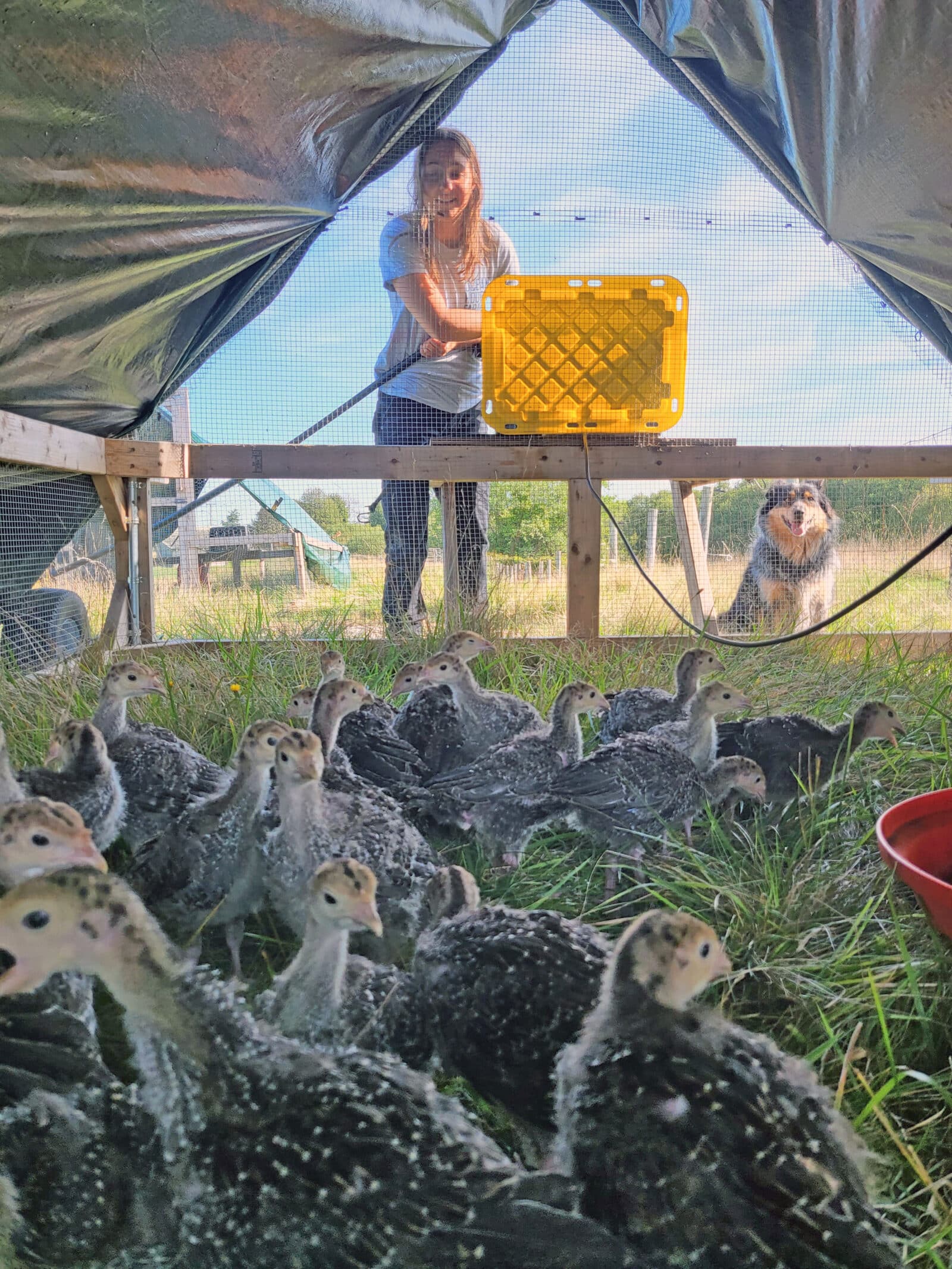
As regenerative farmers, we wanted to use animals (and their poop) to replenish soil nutrients rather than conventional fertilizers. We identified poultry as the best livestock for providing quick nutrients and as a relatively low-cost protein source for our staff and community. Their swift growth allowed us to plan for two rounds of pasture-raised chickens and one round of pasture-raised turkeys.
We rotated poultry in two locations, in our alley cropping land unit ahead of planting more crops the following year, and in our perennial pasture to improve soil health and ultimately ocean health.
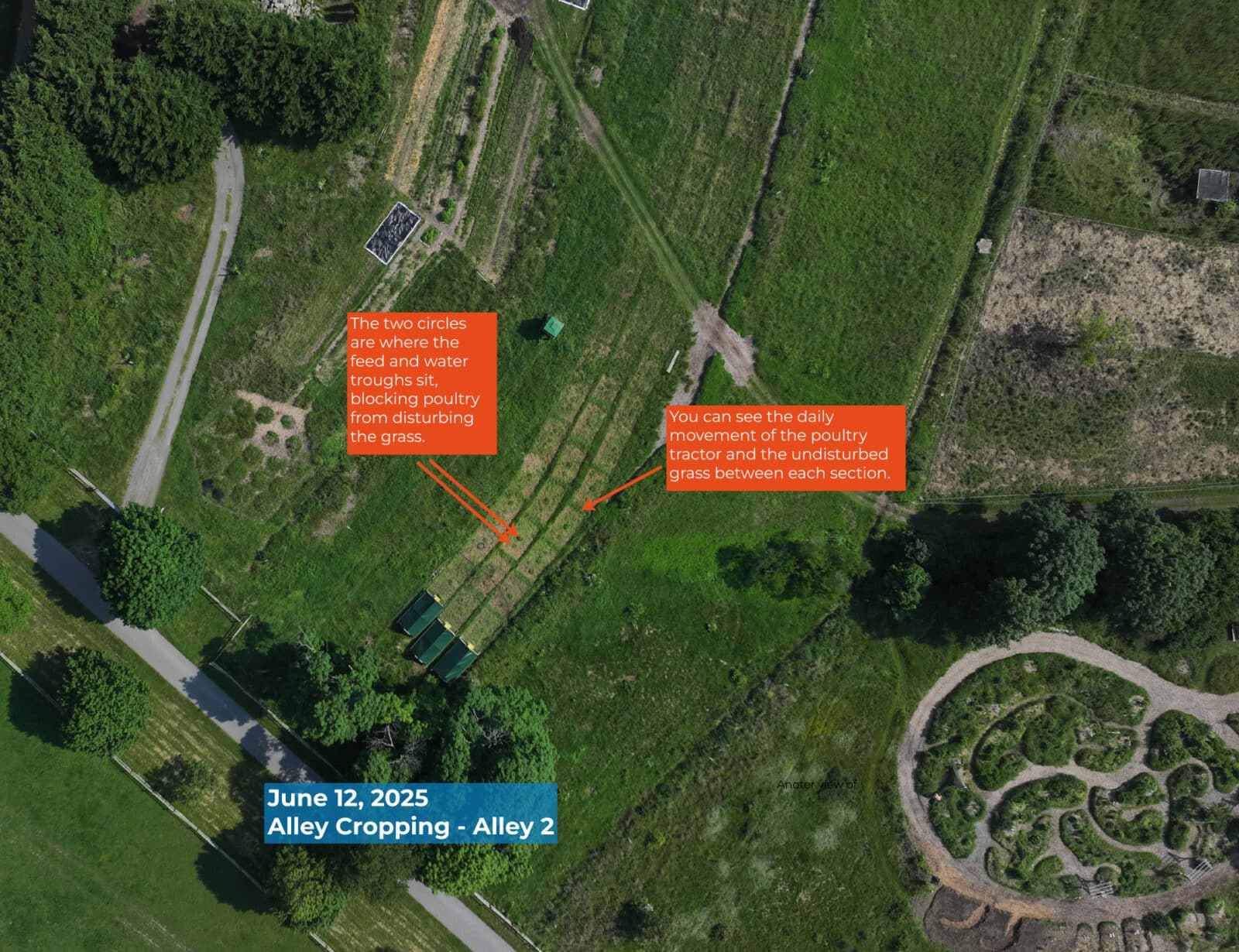
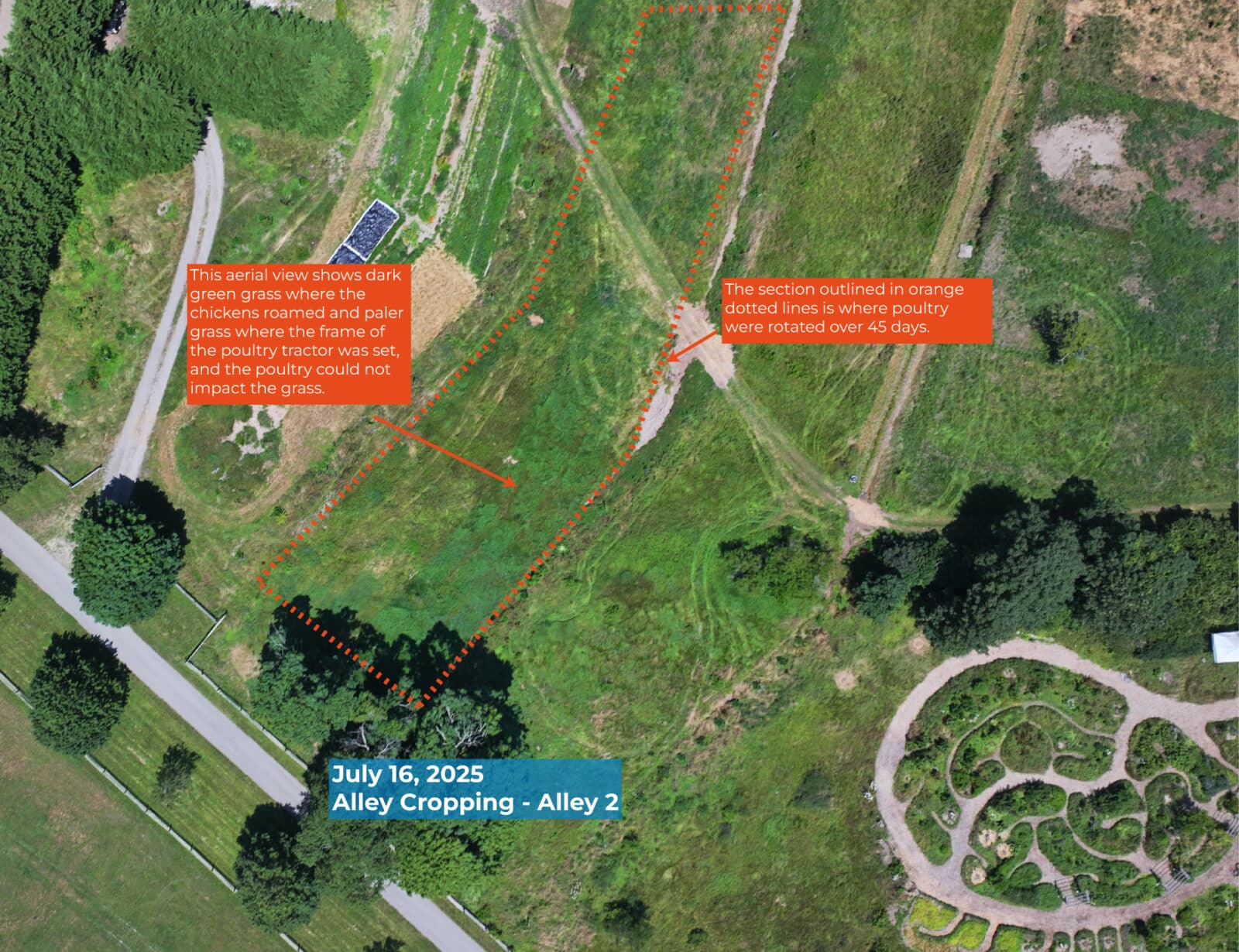
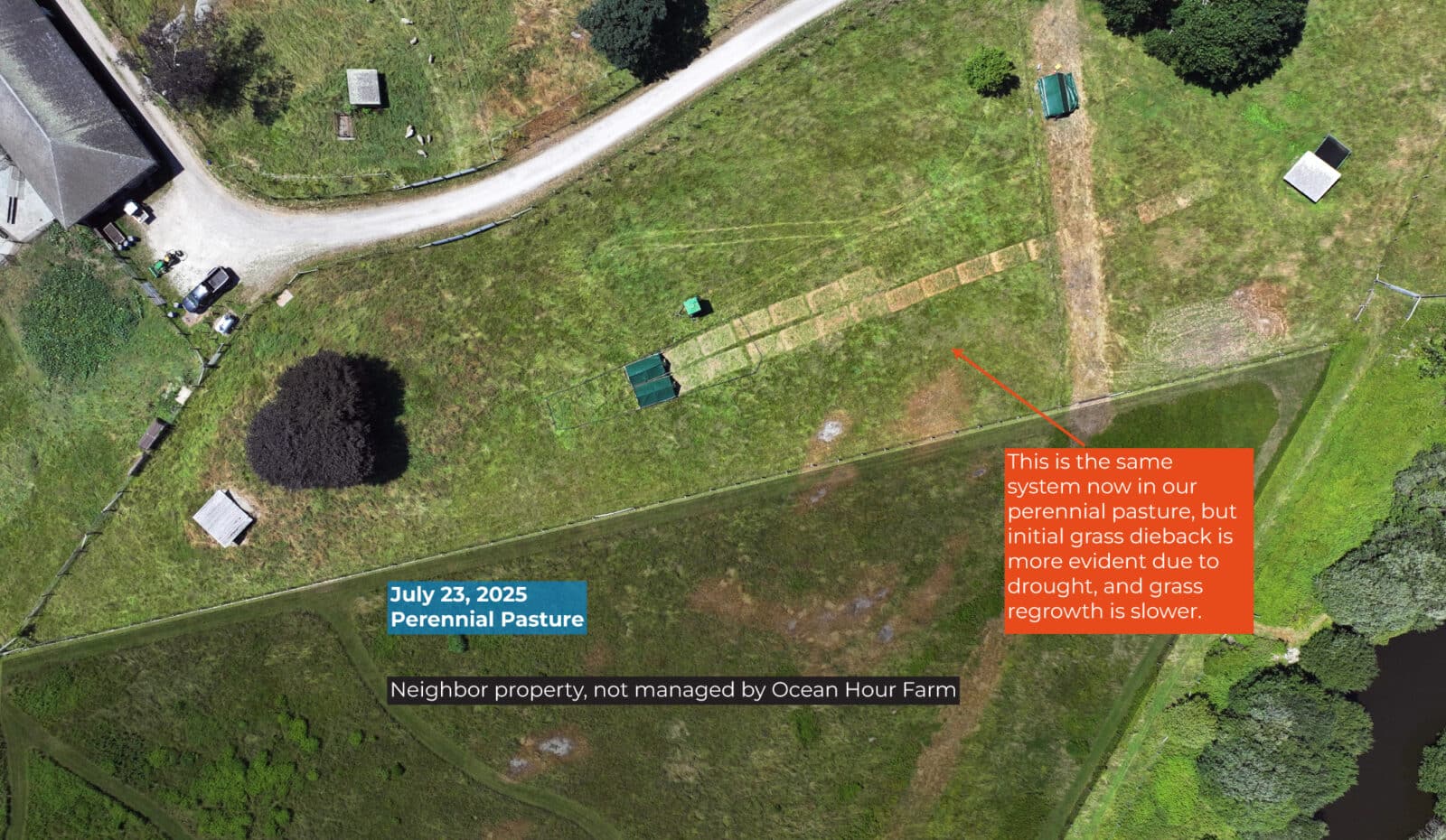
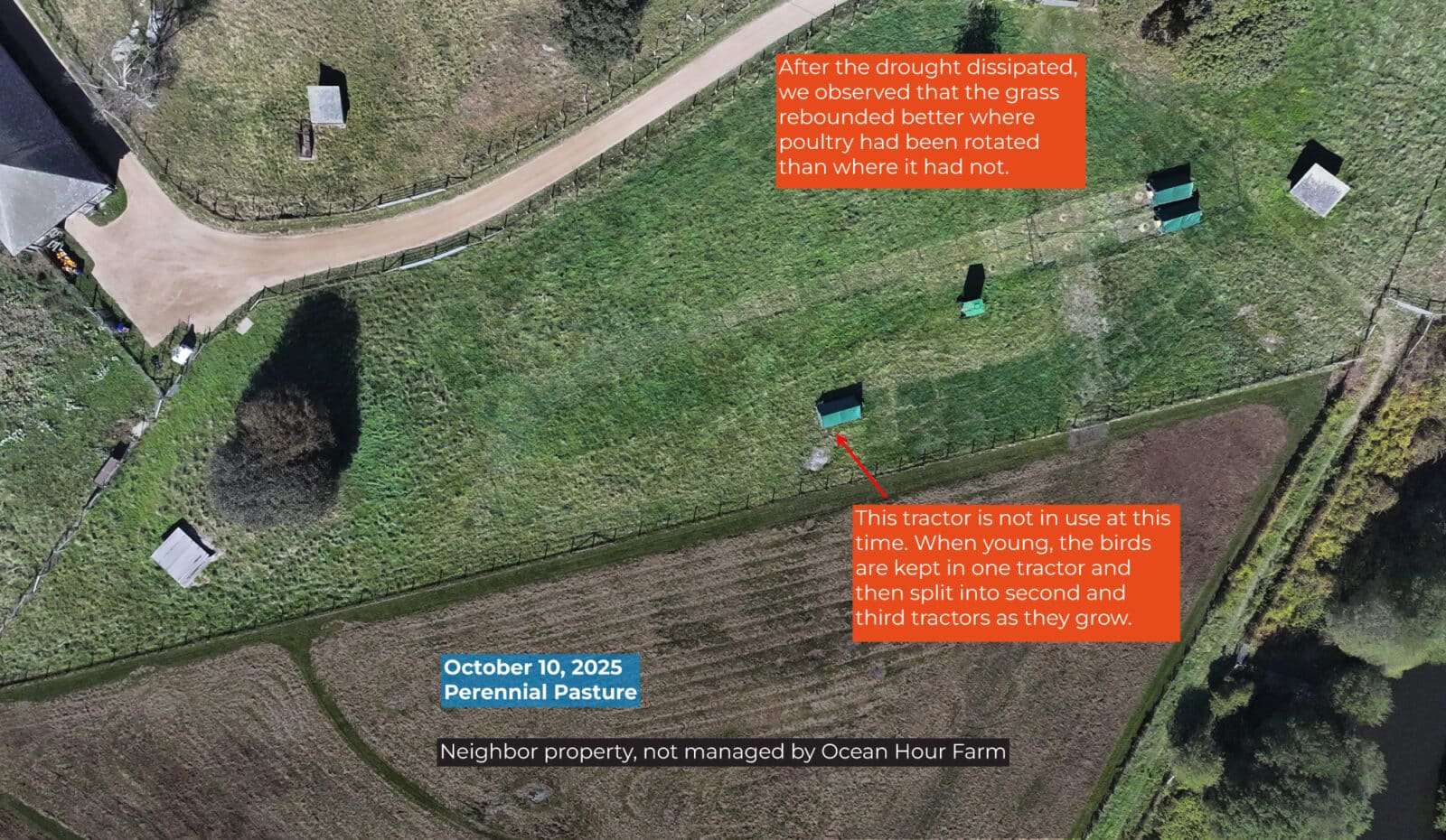
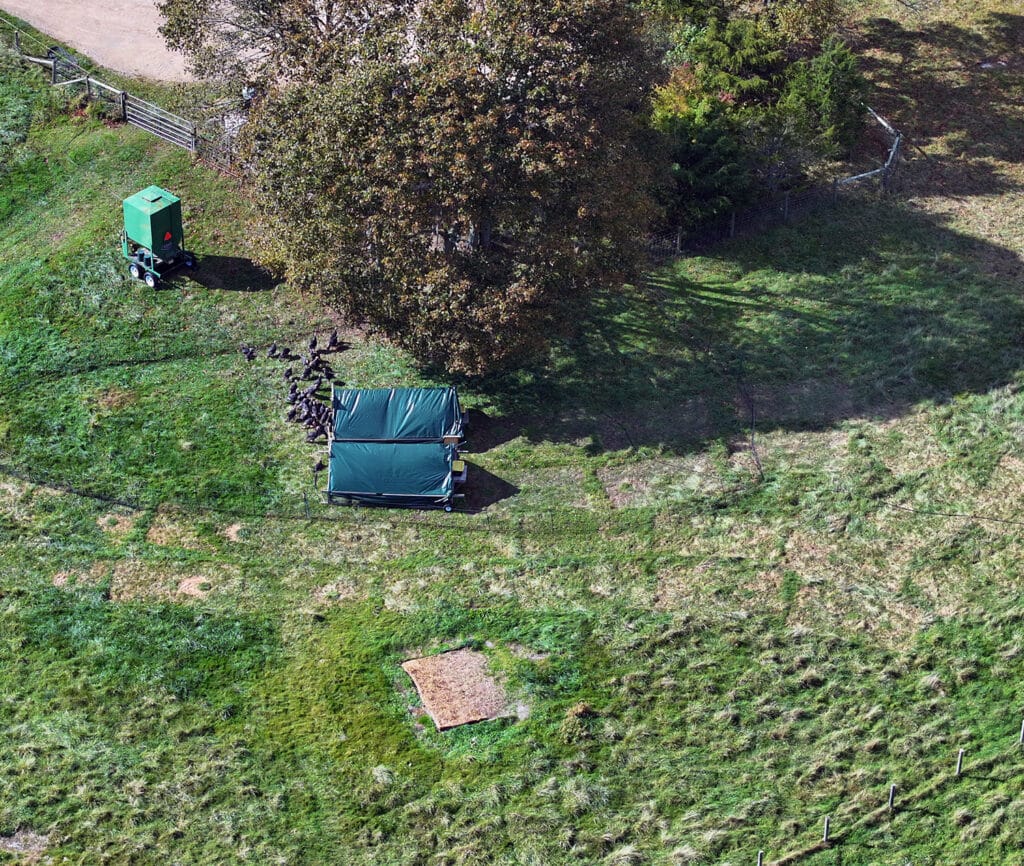
From a grass and soil observation standpoint, we saw grass that was richer in color, had fuller blades, and stronger, deeper roots in the areas where the poultry were present. The soil was less compacted, and when it rained after an abnormally dry summer, our animal systems team observed the grass rebounding more quickly in the areas where the poultry had grazed. These on-the-ground observations are consistent with the supporting drone imagery.
From an economic standpoint, the 300 chickens and 42 turkeys brought in as chicks yielded 1,609 pounds of meat, and we conservatively estimate a value of $13,245. The details of our costs and estimated revenue are noted in the table below.
“In terms of impacting our pasture health, the rotational poultry system made an observable difference in our grasses,” said gg glasson, livestock steward. “As the year ended, our cows grazed where the chickens and turkeys spent the most time, and it felt rewarding to have them grazing on grass that was fertilized by animals we raised.”
“The healthiest soils we saw were in areas where you had done some disturbance to the soil surface with pigs or chickens, or when moving some of the shade sheds and had added some seeds. Those areas had improved plant species, much better forage quality for livestock, but most importantly, those were the only areas where we saw new soil aggregation happening, less compaction, and water was able to soak into the soil surface.” – Sarah Flack, Author of The Art and Science of Grazing & Farm Consultant
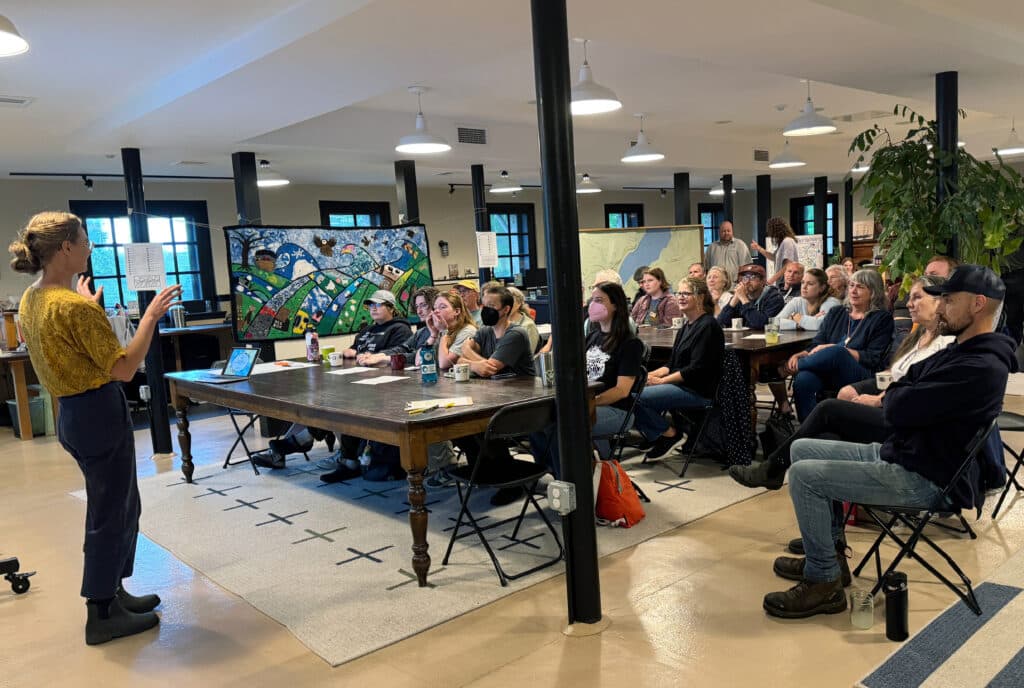
Pictured left: This sample was dug up 10.5 weeks after the poultry had been active on the pasture. Sarah Flack, our pasture consultant, pictured here, noted several strong indicators of healthy soil. The first was good aggregate structure, which is how the soil particles stick to one another. The structure observed here is considered “crumb-like,” which promotes good aeration, water infiltration, and nutrient cycling.
Adding fertilizer, including chicken manure, to depleted soils can lead to excess runoff into our waterways, harming the health of both freshwater and saltwater ecosystems and creating oxygen-deprived dead zones. These issues are well-documented in the Chesapeake Bay.
However, in a rotational grazing system for poultry, the animals inherently fertilize more slowly than when fertilizer is applied broadly by humans or machines. Rotational grazing has been studied for many years and has proven to improve soil health, allowing the soil to absorb more water, reduce runoff, filter pollutants, and, therefore, enhance ocean health.
These studies show that livestock can be raised in ways that are detrimental or beneficial to the environment. As we increase livestock at Ocean Hour Farm, we continue to monitor water quality at seven on-site locations to detect any impact and follow regenerative methods proven to benefit the soil.
This case study demonstrates a regenerative farming technique; it is not a research trial. Our writing details how we implemented these concepts on our land and the field observations made by experienced farmers.
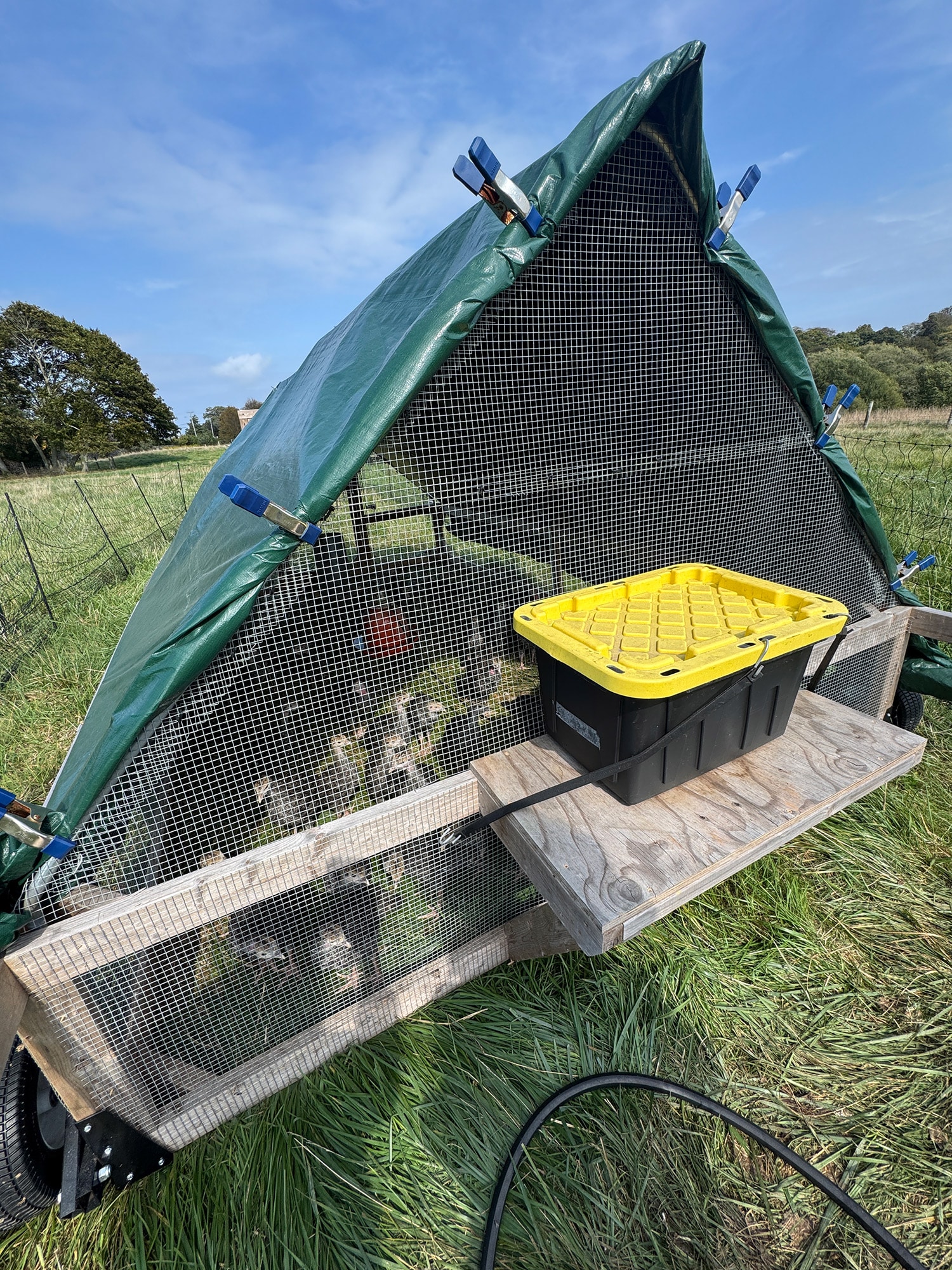
Our preparation work focused on restoring on-site mobile chicken coops and installing electric fences to protect against predators. Our goal was to have equipment that one person could move and to provide the poultry with sufficient room to grow. Our animal systems managers focused on how to easily move water and feed around the field, aiming to keep daily chore time to 30 minutes.
Our plans called for three poultry tractors, as we would split the flock as the animals grew and needed more space. We had 2-3 movable coops (our coops were older and occasionally required to be rotated out for repairs) with extendable fencing for extra protection for the broilers and to extend space for the turkeys.
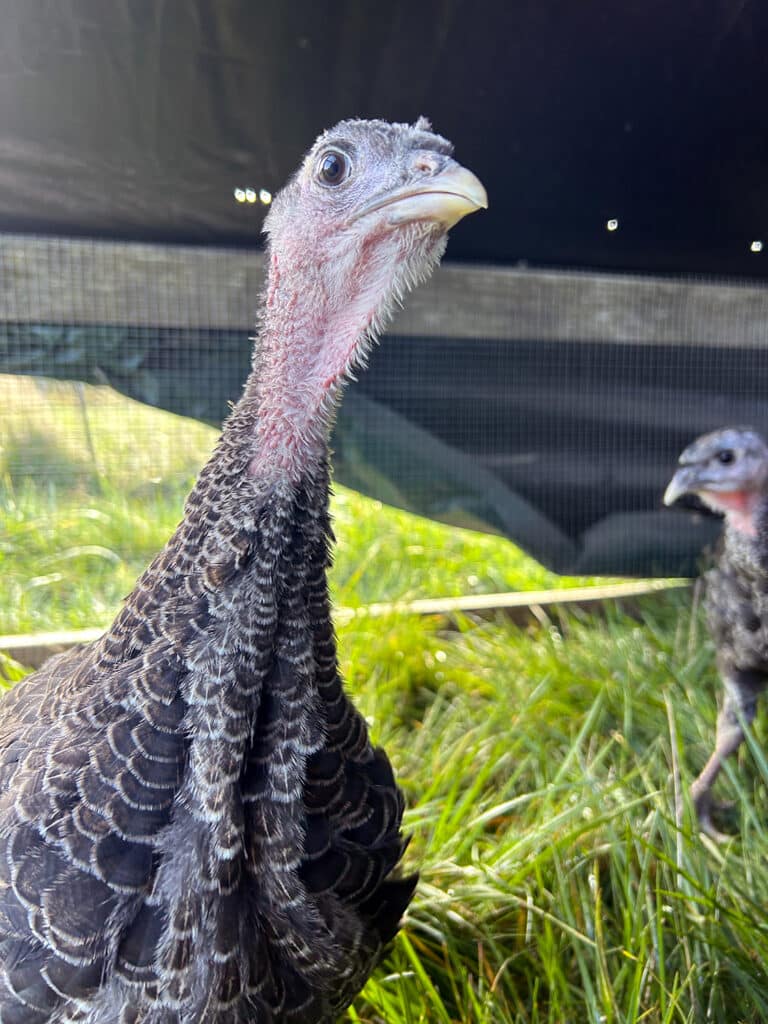
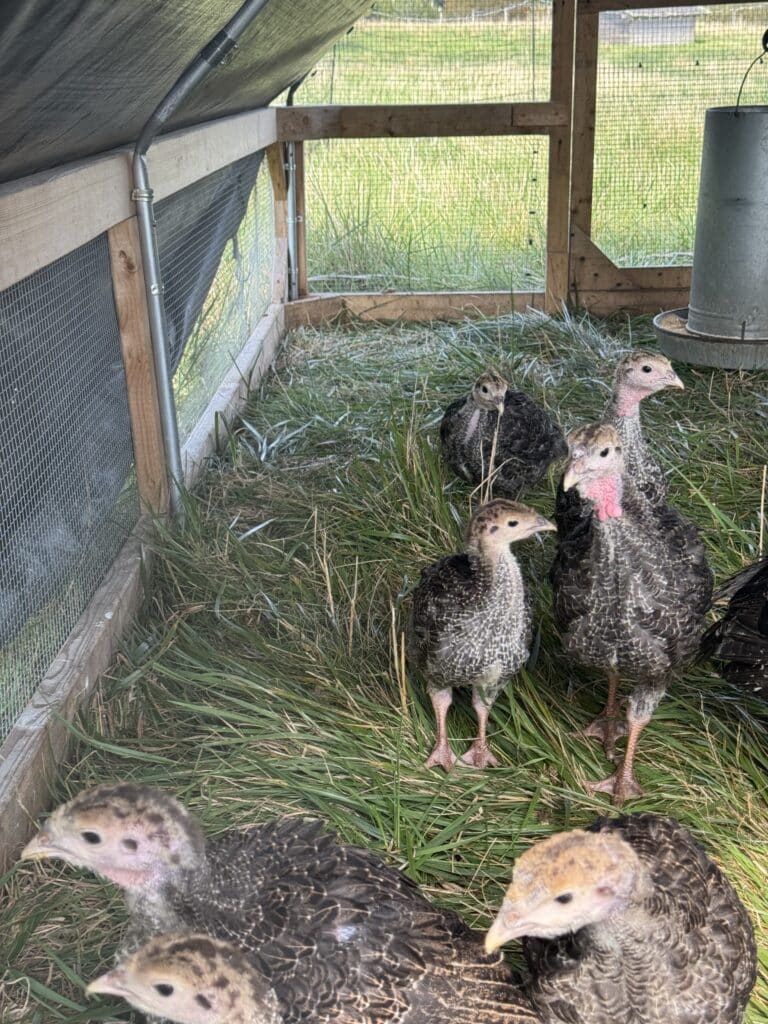
We tested two different chicken breeds and brought in turkeys for the third round of field poultry testing. We timed the turkeys to coincide with the Thanksgiving holiday to align with economic viability and to demonstrate that the same equipment used for broilers works for turkeys.
We also selected Kosher Kings and Freedom Rangers instead of the more common Cornish Cross. The breeds we selected grow for a longer period and are generally healthier, but are not the most efficient birds from an economic perspective, as you feed them for roughly two more weeks.
For every pound of meat a bird gains, they are being fed an estimated four pounds of grain. The intensity of this growth period brings significantly more nutrients to the pasture than having slow-growth egg-laying birds on pasture. By having breeds that need an additional 2 weeks of grain, we are spending more per bird, but ultimately meeting our goal of more nutrients in the soil.
| Date | Activity | Notes |
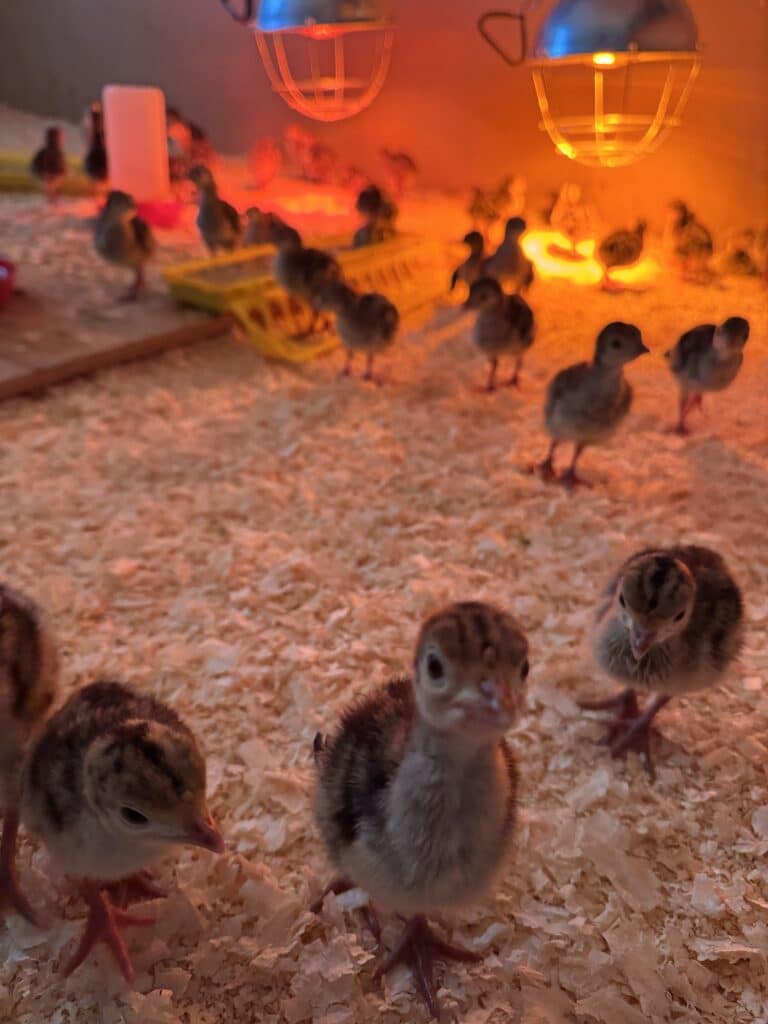
| Early April | 150 Freedom Rangers chicks arrive | Kept warm and safe inside with lights and pine shaving bedding |
| Late April | Pullets head to the field | Chicks started in one tractor and were separated into two tractors when overcrowding occurred, then into three tractors. |
| Early May | Flock is split into two tractors | Roughly 75 birds per tractor |
| Late May | Flock is split into three tractors | Approximately 40 to 50 birds per tractor |
| Early June | 150 kosher kings chicks arrive, second set of broilers | Kept warm and safe inside with lights and pine shaving bedding |
| July 1 | First set of freedom rangers chickens processed | Feed staff on-site and at home |
| July 2 | The second set of pullets, kosher kings, heads to the field | Kept in one tractor while small, and then split into second and third tractors as needed, moved every day, one length of the coop |
| Late August | 42 turkey chicks arrive | Kept warm and safe inside with lights and pine shaving bedding |
| Sept 2 | Second set of chickens, kosher kings, processed | Shared with the community at the Equinox dinner |
| Sept 3 | Turkeys in poultry tractors | Kept in one tractor while small, and then split into second as needed, moved every day, one length of the coop. |
| Nov 3 | Wildlife pressure resulted in a partial loss of the flock | The turkeys were raised in two poultry tractors, as the third was being repaired; they were therefore raised in and outside tractors with an electric fence, a common practice, but it did not work at our location. |
| Nov 17 | Turkeys processed | Given to staff for the holiday |
| Items | Costs |
| Poultry tractor materials, including
tarps, frames, doors, wheels (one-time cost) |
Cost and/or labor time depend on whether you purchase new or repair used equipment, as we did. |
| Electric Poultry Net (one-time cost) | $214 per net, one net per tractor |
| Pine shavings bedding for chicks (yearly cost) | $77.50 |
| Poultry (yearly cost)
150 Freedom Ranger ($1.55 each) 150 Kosher Kings ($1.55 each) 42 Bronze Turkeys ($10.50 each) Sent in three separate shipments |
$1,183 |
Feed (yearly cost)
|
$4,864.46 |
| Bulk Feed Bin (one-time cost) | $3,500 |
| Processing (yearly cost) | $2,815.35 |
| ESTIMATED REVENUE
As a fully funded organization, Ocean Hour Farm operates outside of the traditional marketplace. We utilize 100% of our food for staff, convenings, and local donations, thus preserving the market for independent local farmers. |
|
| Chickens | $11,409 |
| Turkeys
The predation event significantly reduced the estimated revenue. |
$1,834.10
(We estimate $5,920 if all turkeys went to market) |
| Estimated Labor (annual cost, details of how staff used time below) | 117.5 hours |
Additional Materials
These are additional items we used that farms often make, or have on-site, or are relatively low-cost.
Estimated Labor
Our team was encouraged by the changes they observed in grass quality and enjoyed raising the poultry in the pasture. Future concepts they will look into include: