Back to Library
What is rotational grazing?
- Featured, Seeds of Substance
- Animals Systems, Soil Health
Rotational grazing is a method in which livestock graze a portion of a pasture or range at a time. Once they’ve grazed that portion of pasture down, they are moved to another portion to start the process over. By the time they get back to the first portion, it has rested and recovered and is ready to be grazed once more. This is different from continuous conventional grazing, where animals have free range of the entire pasture and are able to graze the whole area at once. When farms utilize rotational grazing, they can put their animals to work improving soil, plant, and animal health.
Grazing, when not carefully managed, can have negative impacts and environmental drawbacks, including soil degradation, erosion, and overgrazing. Rotational grazing is one solution to the environmental problems of grazing.
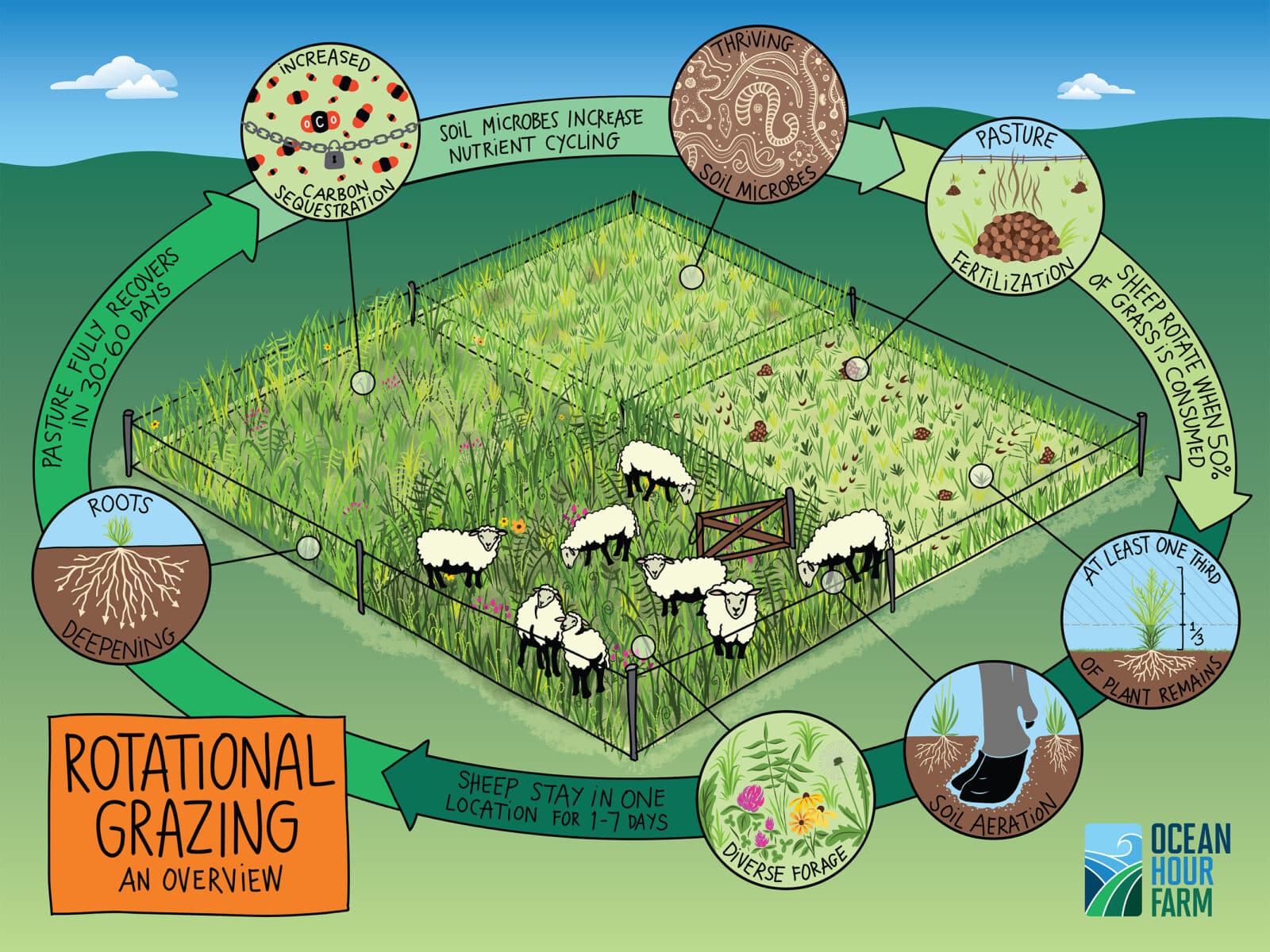
When grass and other pasture plants are grazed, plants respond by generating new roots into the soil so that they can power upward growth. These roots help break up soil, undoing the compaction that happens when animals trod on the soil surface. They also store water and nutrients, and when the plants die the roots will decompose, allowing soil microbes and other organisms to feed and flourish.
Resting land rather than constantly grazing disrupts parasites. Removing access to their preferred hosts in between grazing cycles reduces their impact and leads to better outcomes for both the animals that graze the pasture and the pasture itself.
The practice of rotational grazing can also lead to reduced water pollution, reduced runoff, and better ocean health. When soils are healthy, they’re more able to hold onto water and soak up flooding. They can sequester minerals and organic materials so that they’re not running off into watersheds. And when these materials don’t wash through the watershed, they’re not being deposited into the ocean as pollutants.
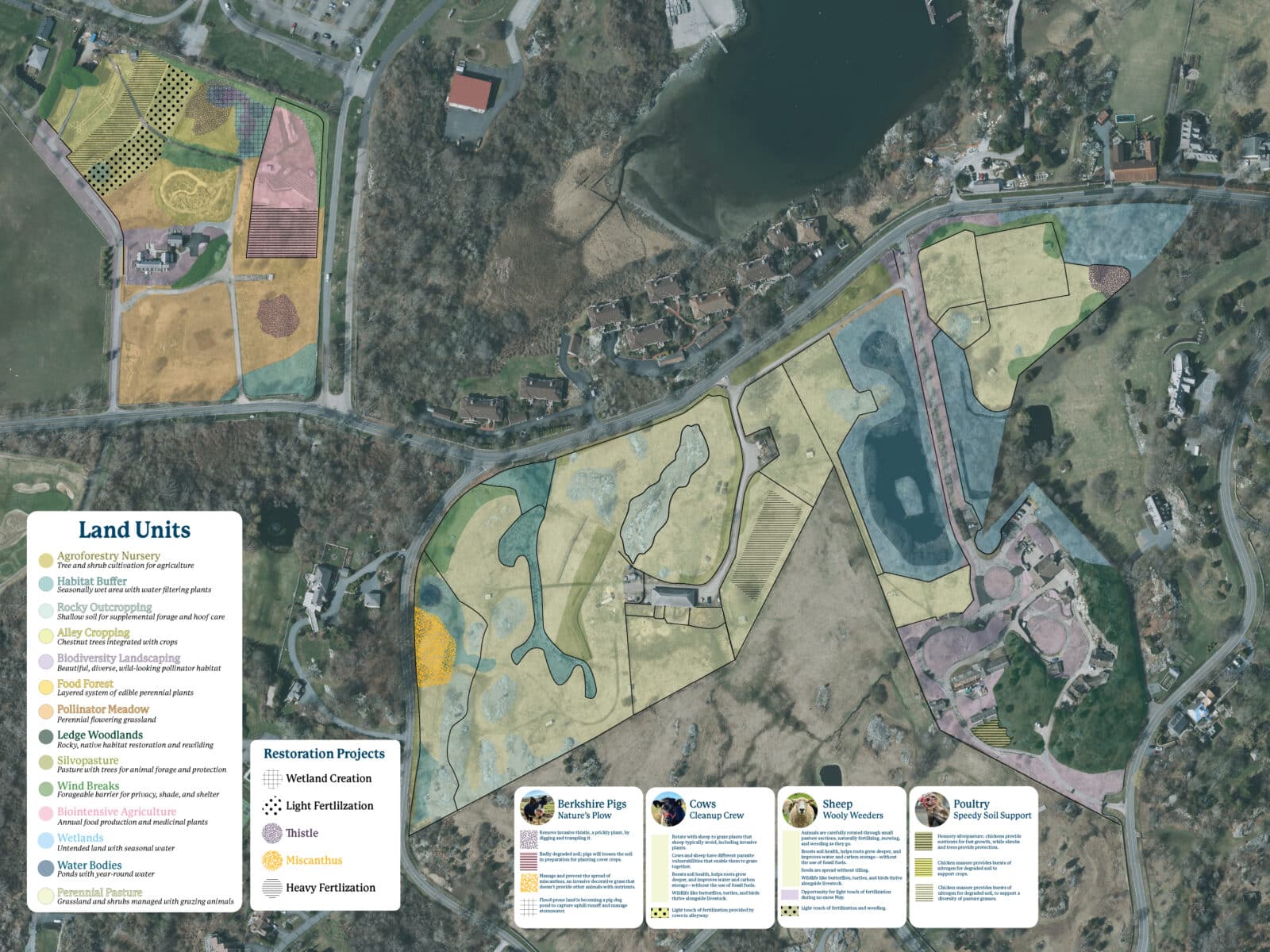
The pastures at Ocean Hour Farm are subdivided using lightweight electric fencing. This allows us to implement rotational grazing, which boosts soil health, helps roots grow deeper, and improves water and carbon storage—without the use of fossil fuels.
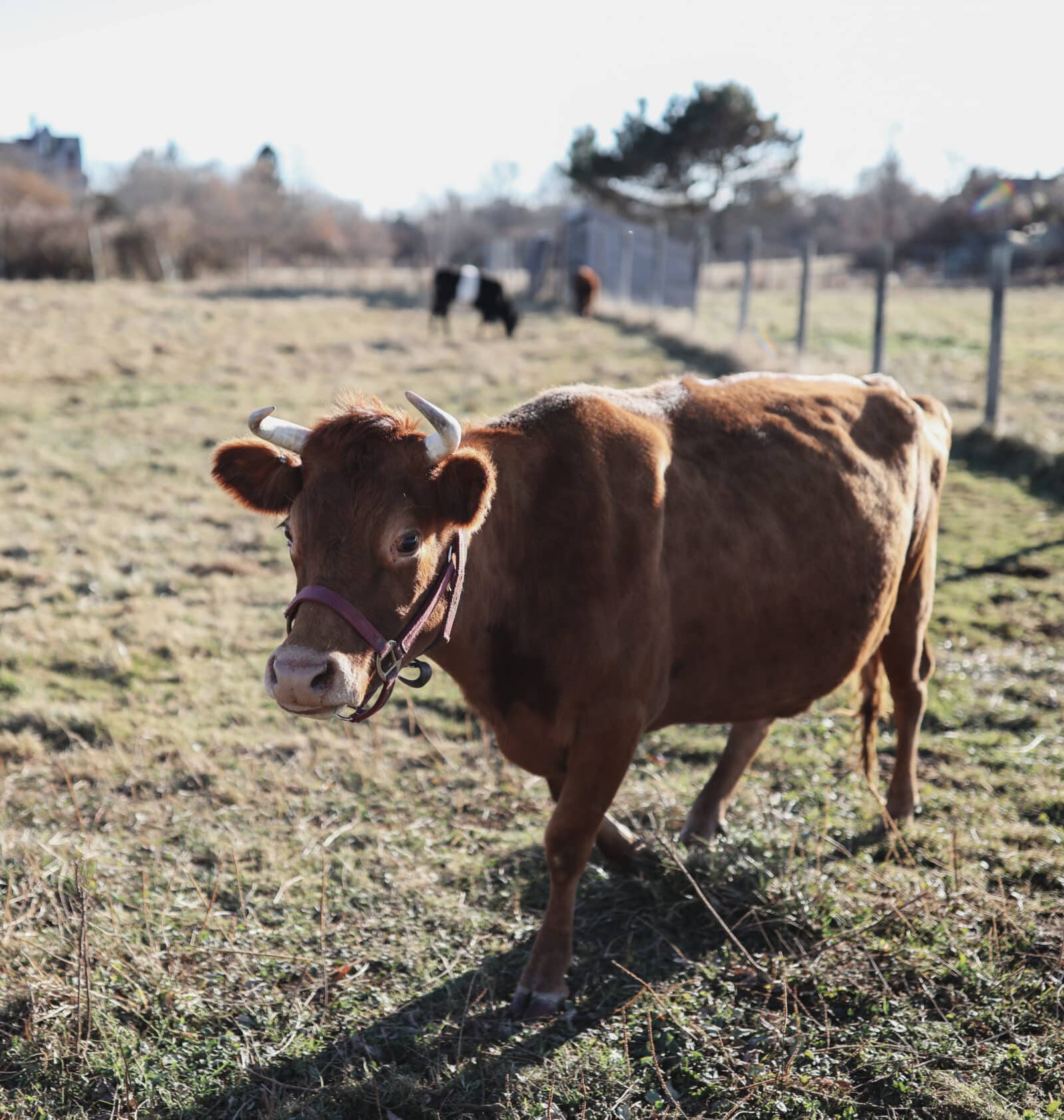
Our cows rotate with sheep to graze plants that sheep typically avoid; this is possible because cows and sheep have different parasite vulnerabilities that enable them to graze together.
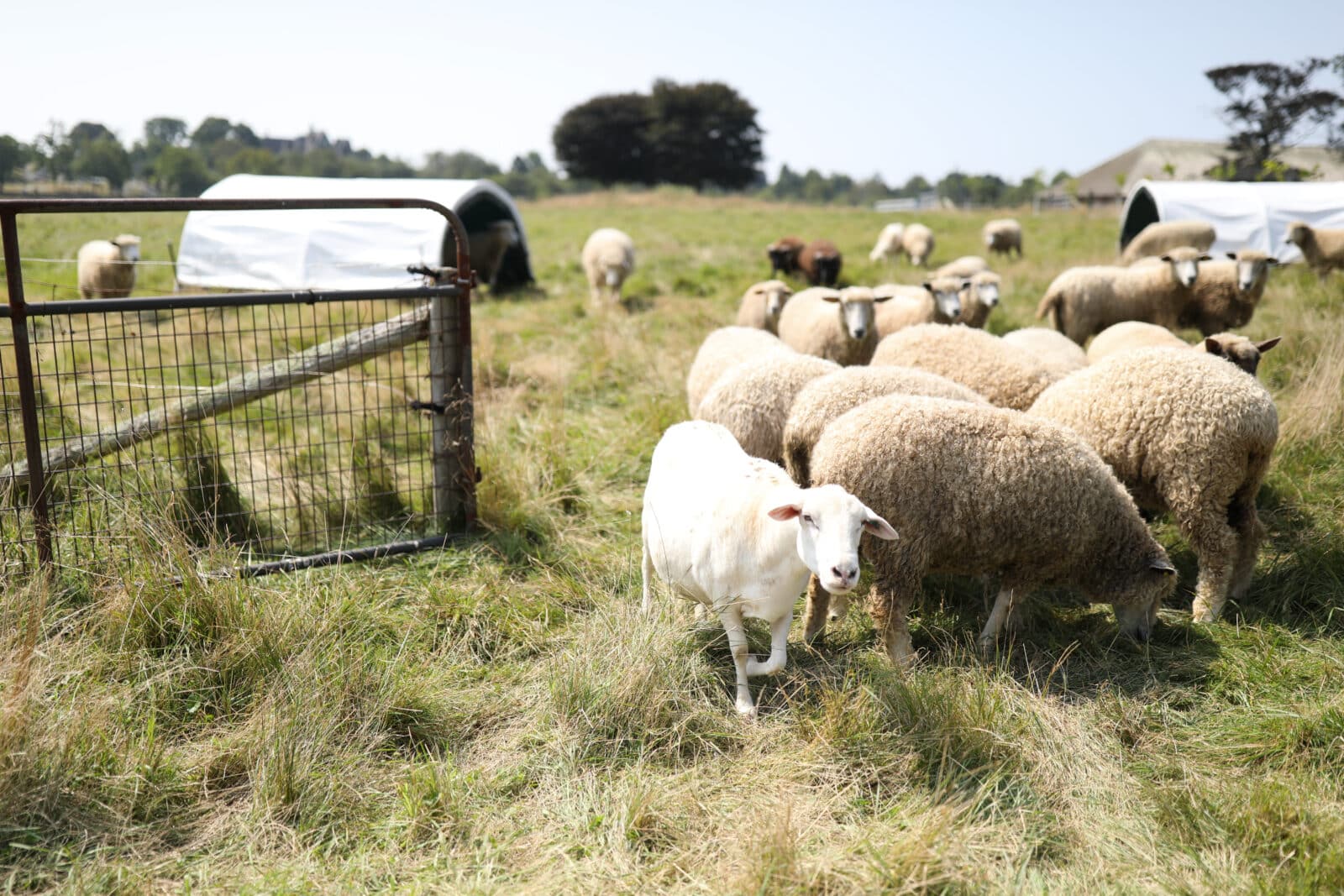
Our flock is carefully rotated through small pasture sections, naturally fertilizing, mowing, and weeding. Before they overgraze or overfertilize any one area of the pasture, they’re rotated onto the next section to begin the cycle anew. This boosts soil health, helps roots grow deeper, and improves water and carbon storage—without the use of fossil fuels. Sheep can also spread seeds without the need to till.
An additional benefit to using livestock as opposed to machinery is that wildlife like butterflies, turtles, and birds thrive alongside livestock.
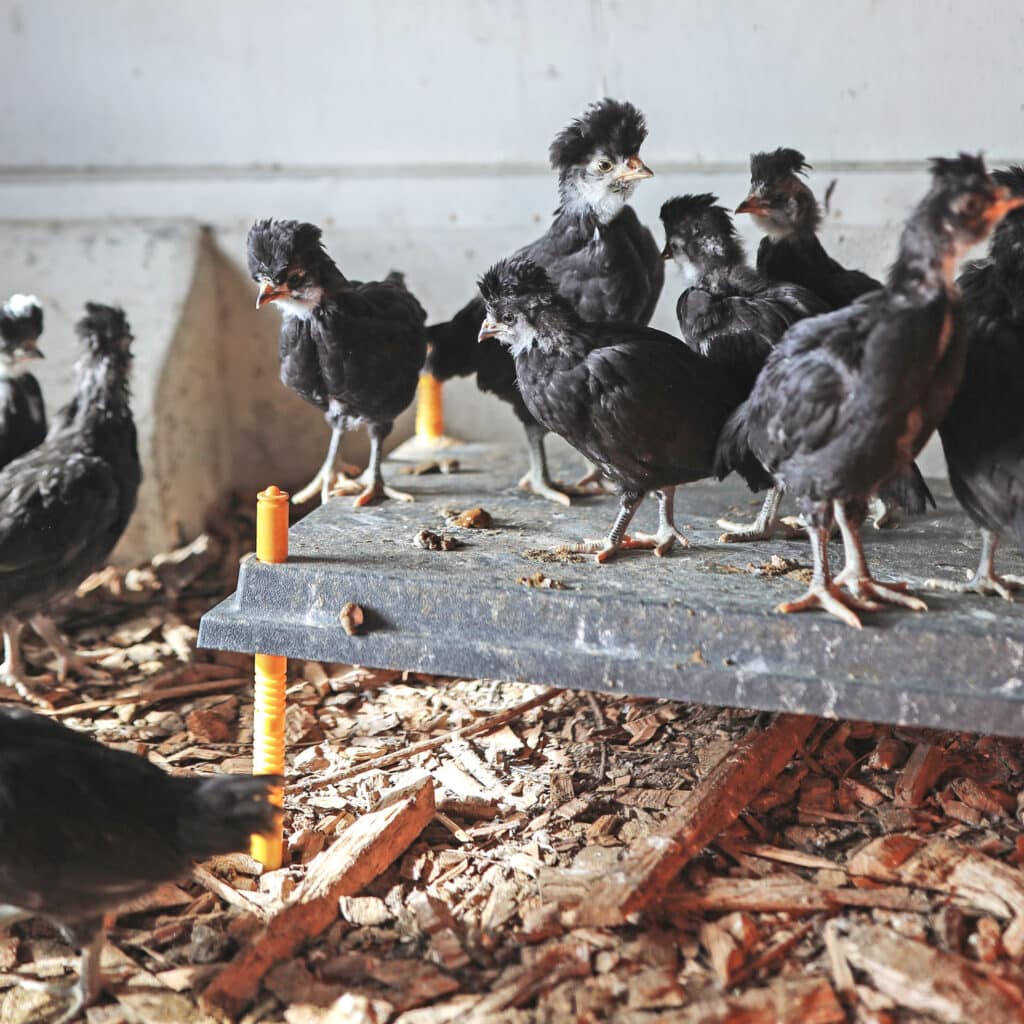
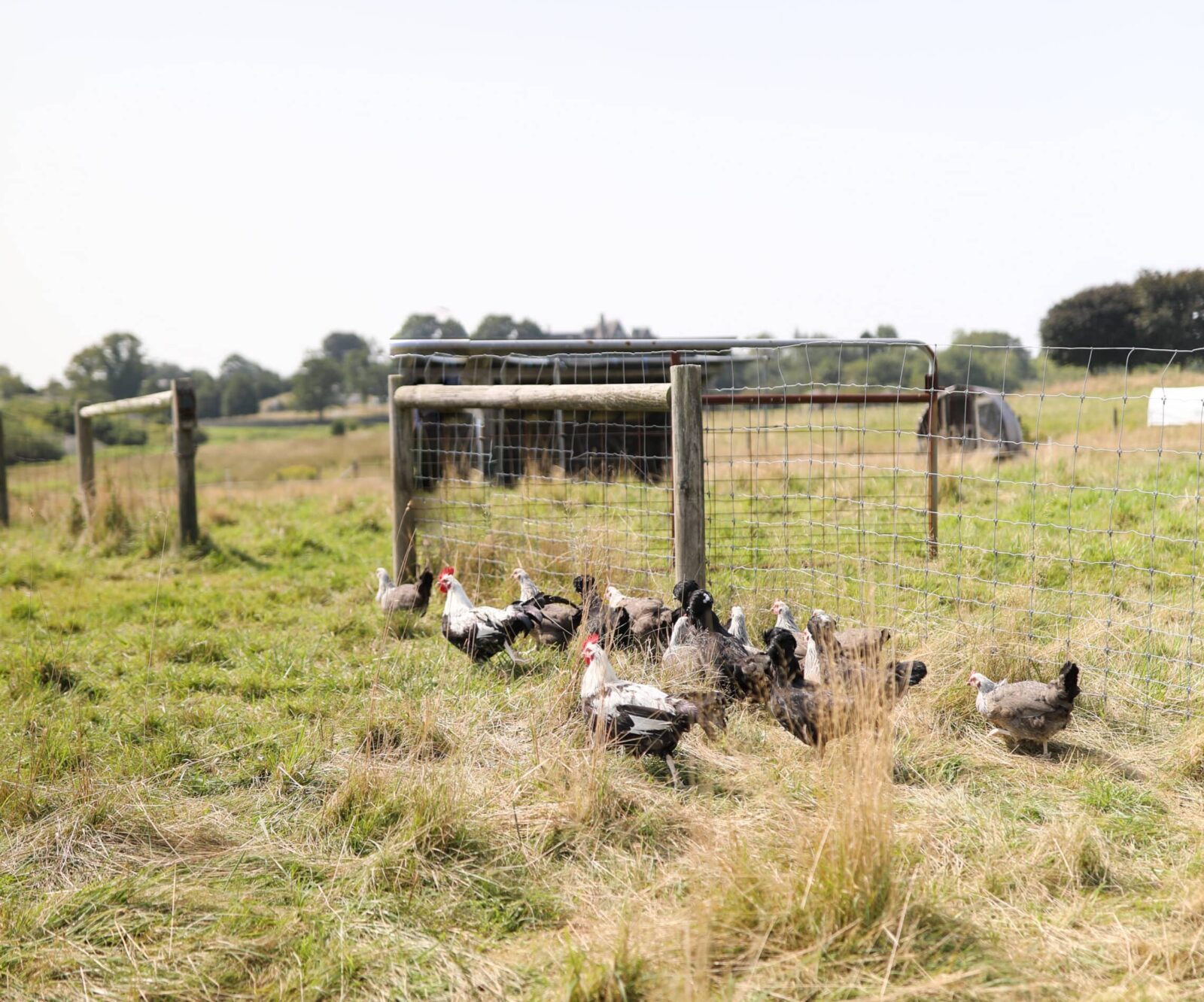
Chickens scratch and peck at seeds, leaves, and bugs as they work their way across the farm. Using mobile coops that can be rolled along the pasture, the chickens fertilize the ground with their nitrogen-rich manure, ideal for degraded soil.
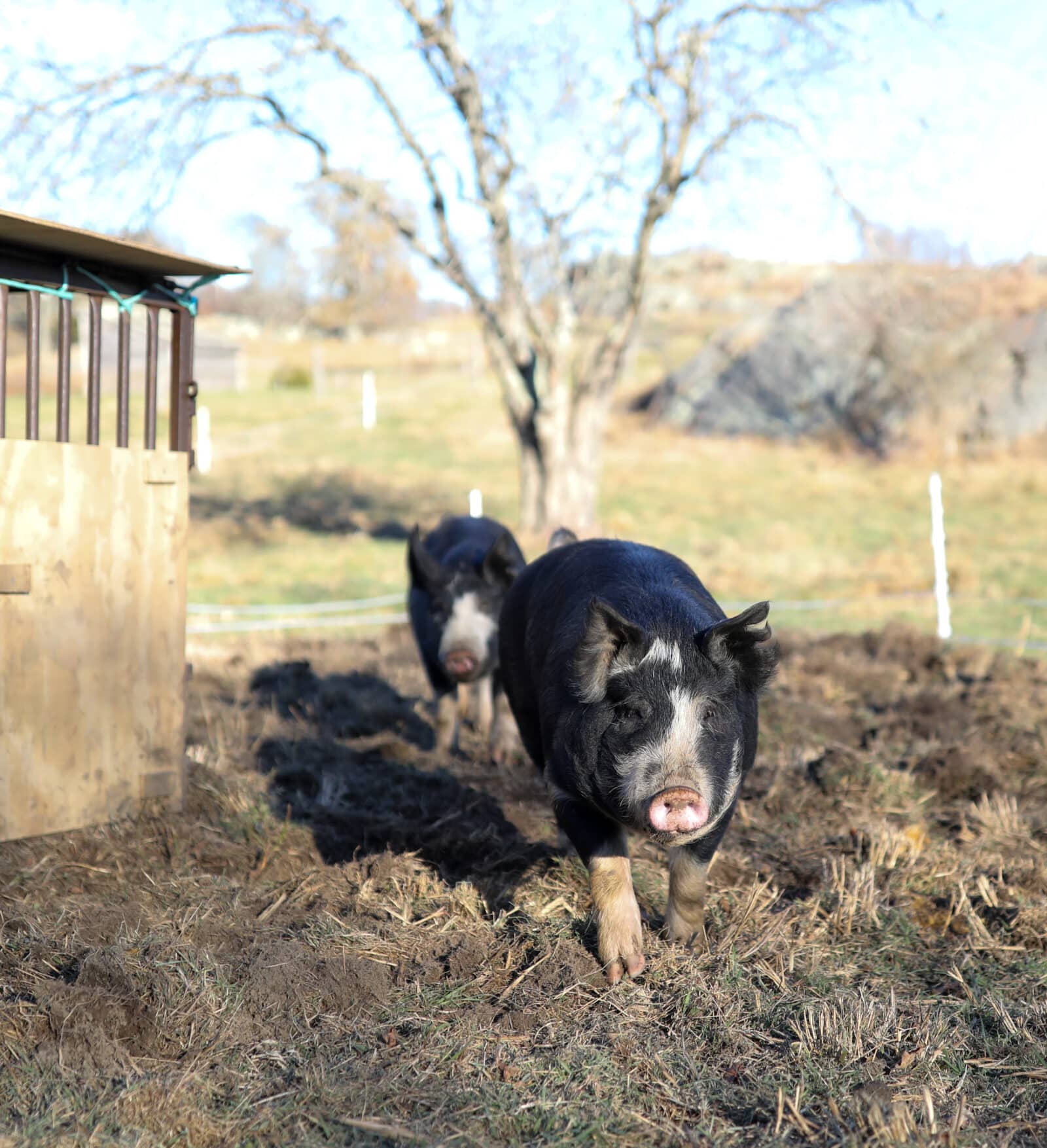
The pigs manage and prevent the spread of miscanthus, an invasive decorative grass that doesn’t provide livestock with nutrients. Additionally, they remove invasive thistle, a prickly plant, by digging and trampling it. Their other primary function is to loosen degraded soil and manage stormwater.
A herd of animals grazing on a range may seem entirely unrelated to the health of the ocean, but the truth is that the two are deeply entwined. Everyone can make choices that can impact the world around us. By choosing rotational grazing, pastures stay healthy, keeping soils intact and reducing the runoff that makes it into the watershed. Utilizing rotational grazing on our land is one way that Ocean Hour Farm can positively affect our watershed and the ocean at large.